Webdoc Behind the Wheel: Cadillac’s Moonshot
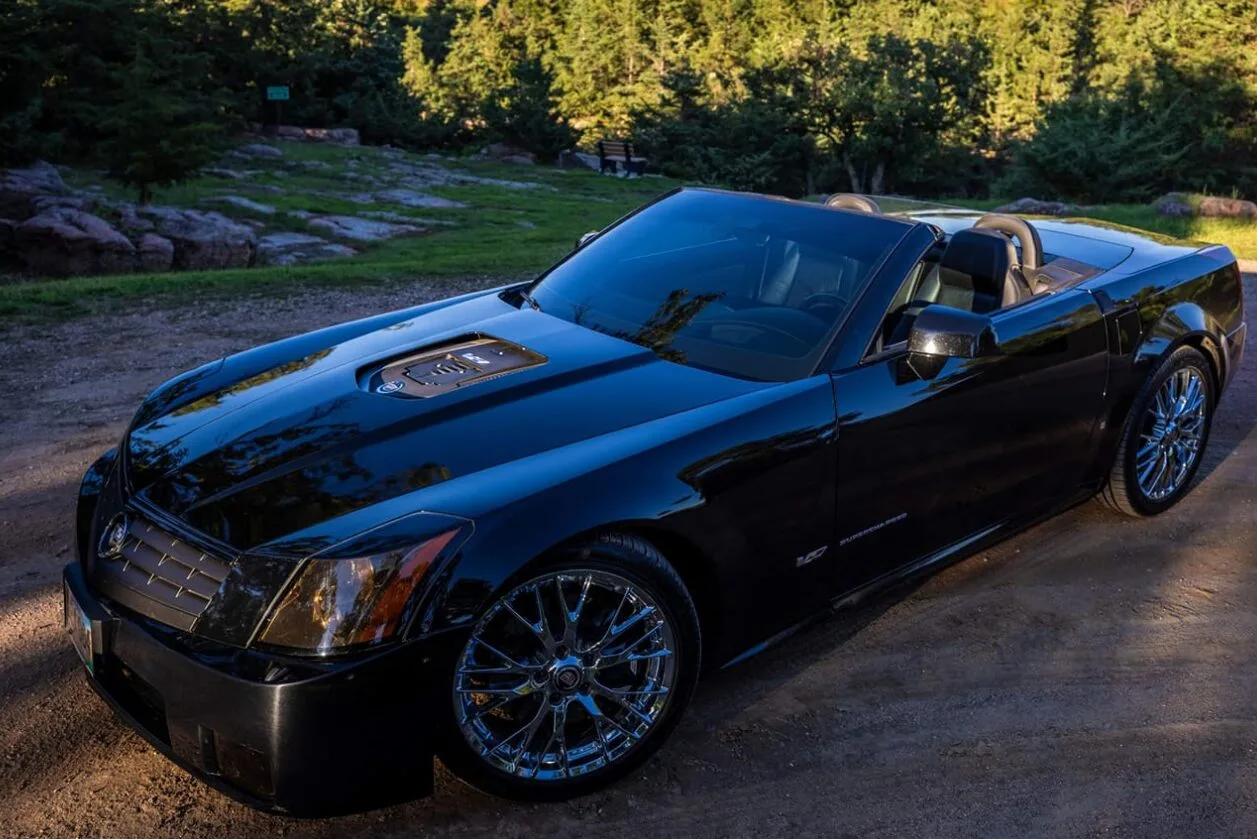
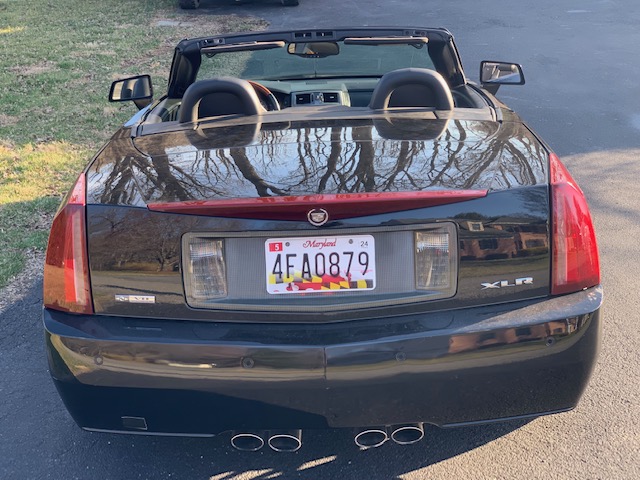
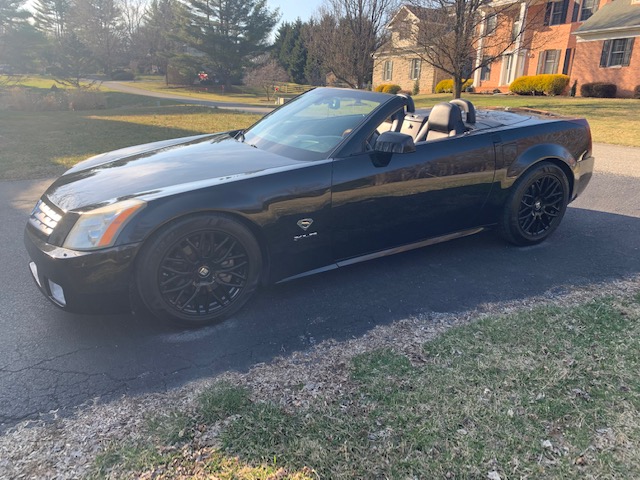
The Cadillac XLR Wasn’t Just a Car, It Was a Statement
Every once in a while, an automaker builds a car that makes you stop and ask a simple question:
“What were they thinking?”
Sometimes that’s a bad thing.
In the case of the Cadillac XLR, it’s one of the reasons I love the car.
The XLR wasn’t designed to compete with a Chevrolet Corvette.
It wasn’t designed to be another luxury convertible.
And it certainly wasn’t built to play it safe.
The Cadillac XLR was General Motors taking one of its best engineering platforms, adding some of its most advanced technology, wrapping it in one of the boldest designs of the early 2000s, and telling the world that Cadillac was back.
Whether the market understood it or not is another story.
Cadillac Had Something to Prove
To understand the XLR, you have to remember where Cadillac was in the late 1990s.
For decades Cadillac had dominated the American luxury market. But by the turn of the century, buyers were flocking to Mercedes-Benz, BMW, Lexus, and Jaguar. Cadillac had become known more for comfort than innovation.
GM knew something had to change.
The answer was a dramatic new design language called Art and Science.
The first glimpse of that future arrived in 1999 with a concept car called the Evoq.
The reaction was immediate.
The sharp lines, aggressive stance, and futuristic appearance looked nothing like the Cadillacs people had grown accustomed to.
Fortunately, GM had the courage to build it.
The result was the Cadillac XLR.
Corvette DNA, Cadillac Personality
One of the most interesting things about the XLR is what lies underneath.
The car shared much of its architecture with the Chevrolet Corvette.
That immediately gave Cadillac something it hadn’t had in years, performance credibility.
The hydroformed frame, rear transaxle layout, near-perfect weight distribution, and rear-wheel-drive platform were all proven Corvette engineering.
But Cadillac wasn’t interested in building a Corvette with different badges.
The mission was entirely different.
The Corvette was a sports car.
The XLR was a grand touring luxury roadster.
The goal wasn’t to dominate racetracks.
The goal was to cruise across states in comfort while still being able to embarrass plenty of sports cars along the way.
The Technology Showcase
What really made the XLR special was the technology.
In many ways, the XLR was a rolling laboratory for General Motors.
The most impressive feature was Magnetic Ride Control.
Today adaptive suspensions are common.
Twenty years ago they were revolutionary.
The system used magnetically charged fluid inside the shock absorbers, allowing the suspension to react almost instantly to changing road conditions.
The result was remarkable.
The XLR could ride comfortably on rough roads while maintaining excellent control when pushed through corners.
Even today, Magnetic Ride Control remains one of the most impressive suspension technologies in the automotive industry.
Then there was the retractable hardtop.
At the push of a button, the XLR transformed from a sleek coupe into a convertible in less than thirty seconds.
At the time, very few manufacturers had perfected retractable hardtop technology.
Mercedes-Benz had done it successfully with the SL, and Cadillac wanted to compete directly with the best.
The roof wasn’t just functional.
It was theater.
People stopped and watched every time it operated.
Cadillac’s Answer to the Mercedes SL
That’s really where the XLR belonged.
Many people mistakenly compare it to the Corvette because of its shared platform.
The real target was the Mercedes-Benz SL.
Cadillac wanted buyers who appreciated luxury, technology, exclusivity, and style.
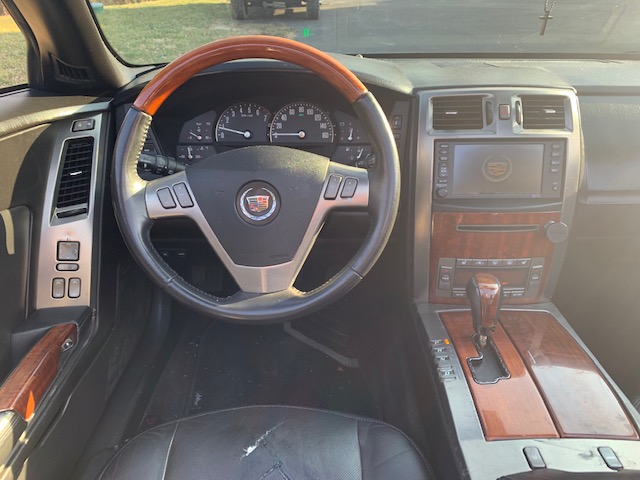
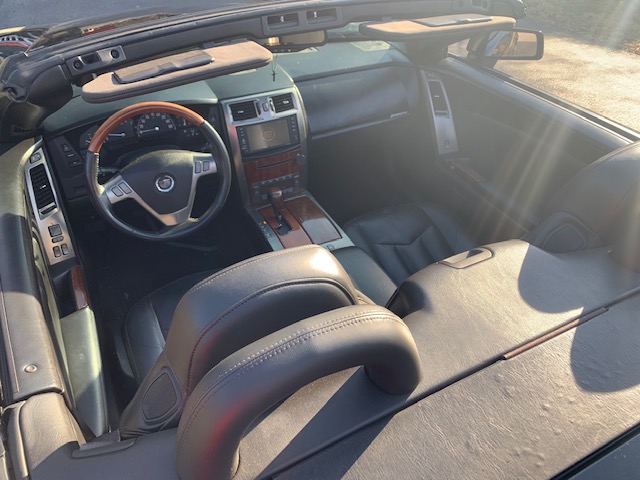
The XLR came loaded with features that were cutting edge at the time.
Navigation.
Adaptive cruise control.
Head-up display.
Heated and cooled seats.
Premium Bose audio.
OnStar connectivity.
For the early 2000s, this was serious technology.
The XLR wasn’t trying to be the fastest car in the room.
It was trying to be the smartest.
The Northstar Years
One decision continues to spark debate among enthusiasts.
Instead of using Corvette’s LS-series V8, Cadillac chose its own Northstar engine family.
The standard XLR featured a 4.6-liter Northstar V8 producing 320 horsepower.
Smooth, refined, and responsive, it fit the luxury mission perfectly.
Then came the XLR-V.
Now things got interesting.
Under the hood sat a supercharged 4.4-liter Northstar V8 producing 443 horsepower.
That made the XLR-V one of the fastest Cadillacs ever built at the time.
Zero to sixty arrived in approximately 4.6 seconds.
Not bad for a luxury roadster carrying a retractable hardtop and enough technology to impress Silicon Valley.
Why Didn’t It Sell?
That’s the question enthusiasts still ask today.
The answer is surprisingly simple.
The XLR occupied a very narrow space in the market.
Sports car buyers bought Corvettes.
Luxury buyers bought Mercedes-Benz.
Performance enthusiasts bought Porsche.
The XLR sat in the middle.
It was expensive.
It was unique.
It was difficult to categorize.
Unfortunately, those qualities don’t always lead to strong sales.
Over its production run from 2004 through 2009, Cadillac sold only about 15,000 examples.
In automotive terms, that’s rare.
Very rare.
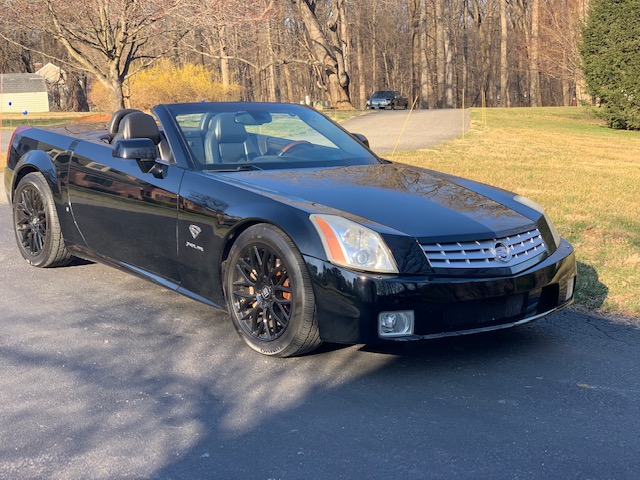
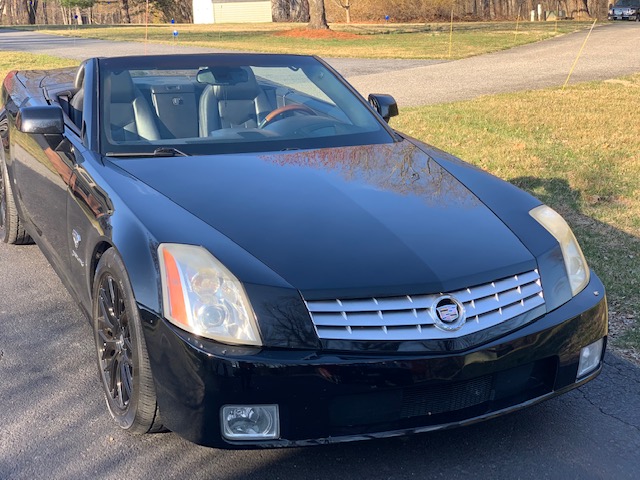
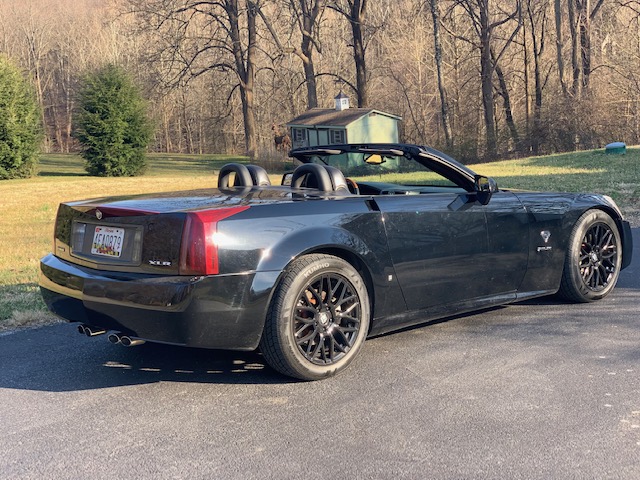
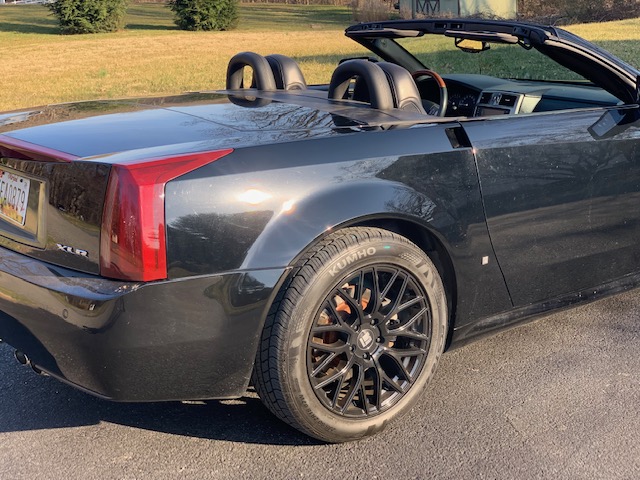
Why the XLR Deserves More Respect
The older I get, the more I appreciate cars like the XLR.
It’s easy to admire vehicles that sold in huge numbers.
It’s easy to celebrate obvious successes.
What’s harder is appreciating a vehicle that took a risk.
The XLR was a risk.
Cadillac could have played it safe.
Instead, they built a car unlike anything else on the road.
It combined Corvette engineering, Cadillac luxury, advanced technology, and bold styling into a package that remains distinctive more than twenty years later.
That’s not easy to do.
A Future Classic
Today, the XLR occupies an interesting place in automotive history.
Collectors are beginning to recognize its significance.
The styling has aged remarkably well.
The technology was ahead of its time.
The production numbers are low.
And every year there are fewer clean examples available.
The XLR may never reach the values of a vintage Corvette or a classic Mercedes SL.
That’s not the point.
The point is that it represents one of the most ambitious projects Cadillac ever attempted.
It was a car built to announce a comeback.
A car designed to change perceptions.
A car that proved Cadillac could still dream big.
For me, that’s what makes the XLR special.
Not because it was perfect.
Because it was bold.
And sometimes the most memorable cars are the ones willing to take a chance.
The Cadillac XLR did exactly that.
And for that reason alone, it deserves its place in automotive history.
— Peter “Webdoc” Martin
Webdoc Behind the Wheel is a series celebrating the cars that changed the automotive landscape, inspired generations of enthusiasts, and left a lasting impact on automotive history.

Like what you’re reading?
If you’d like to explore how content writing, blogging and articles can boost your online presence or want more information, schedule a quick call with Peter “webdoc” Martin.
Share or Print