
<p>Before the Z28 became one of Chevrolet’s most recognizable badges, it was a little-known Camaro option built to take on Ford’s Mustang in Trans-Am racing. From the original high-revving 302 V8 to the track-focused 2014 revival, follow the story of the Camaro that showed what American muscle could do in the corners.</p>
If you have spent your life immersed in the automotive world, you learn that certain alphanumeric codes carry a magical resonance. In the Porsche world, it’s "RS." At BMW, it’s "CSL." But in the pantheon of American muscle and motorsport, few three-character codes evoke as much pure, unadulterated excitement as Z28.
Long before the Z28 became a household name and a badge emblazoned on the fenders of late-20th-century street cruisers, it was something far more exotic: a covert, uncompromising factory road-racer disguised as a pony car. It was built for one solitary purpose, to destroy the competition on the road-racing circuits of North America.
My love affair with high-performance machinery began at a young age when I was working at Timo Race Corp during high school under Heinz Werner Bade, one of the most respected Porsche mechanics in America. Heinz was legendary for his work with Bruce Jennings ("King Carrera") and his mastery of air-cooled, high-revving racing engines. Working in that shop taught me to appreciate precision chassis balance, race preparation, and engines that loved to rev to the moon. While my early hands-on tuning centered on German sports cars, living through the golden era of American muscle gave me an intense, permanent respect for what Chevrolet created when they built the original Camaro Z28. It was the moment American muscle stopped being just about straight-line drag racing and started mastering the art of apex-carving road racing.
The Origin Story: Vince Piggins and the Secret Trans-Am Homologation
To understand why the Z28 holds such a revered place in automotive history, you have to rewind to 1966. Ford had introduced the Mustang in 1964 and created a cultural sensation. General Motors responded in late 1966 with the 1967 Chevrolet Camaro. But while the standard Camaro was a handsome, popular street car, Chevrolet had a serious problem: the Sports Car Club of America (SCCA) had just launched the Trans-American Sedan Championship (Trans-Am), and Ford’s Mustang was dominating the road courses.
Enter Vince Piggins, the head of Chevrolet’s Product Performance Group. Piggins was a brilliant, clandestine operator inside GM. At the time, General Motors was strictly enforcing an internal corporate ban on factory-backed racing. Piggins knew he couldn't build a factory race team, but he could build a road-legal homologation special and quietly make it available to privateer racers.
The SCCA Trans-Am rules were simple but strict: competing vehicles had to be four-seater production cars with a wheelbase under 116 inches, and engine displacement was capped at 305 cubic inches (5.0 liters).
Chevrolet had plenty of engines in 1967, but none fit the rulebook. They had the small-block 283 V8 (too small) and the 327 V8 (too big). Piggins executed a stroke of engineering genius: he took the 4.00-inch cylinder bore of the 327 block and stuffed in the 3.00-inch short stroke crankshaft from the 283. The result was a custom-engineered, ultra-oversquare displacement of exactly 302.4 cubic inches.
Piggins slipped this race-bred package onto the Camaro option order sheet under regular production option code RPO Z28. It wasn't advertised in slick sales brochures, nor was it hyped on television. In 1967, if you didn't know an insider at a Chevrolet dealership, you didn't even know RPO Z28 existed. Only 602 units were produced that first year, making the 1967 Z28 one of the most sought-after collector cars on Earth today.
The Heart of the Original Beast: The Legendary High-Revving 302 V8
What made the original 1967–1969 Camaro Z28 engine so mythical among car lovers was its mechanical personality. Traditional American V8s of the 1960s were heavy-chested torque monsters designed to pull hard from 1,500 to 4,500 RPM. The 302 V8 was the exact opposite: it was a high-strung, free-revving race motor that didn't even wake up until you passed 4,000 RPM, pulling furiously all the way to 7,000+ RPM.
Mechanical Highlights That Make Enthusiasts Drool:
Solid-Lifter Camshaft: Unlike hydraulic lifters that pump up at high engine speeds, the Z28 used mechanical solid lifters ("Duntov" cams) that required manual valve lash adjustments, giving the car a distinct, mechanical idle clatter that sounded like a idling race car.
Forged Internal Components: A forged steel crankshaft, forged aluminum pistons, and heavy-duty connecting rods allowed the engine to withstand continuous high-RPM track abuse without throwing a rod.
Flow & Breathing: A massive Holley 800-CFM four-barrel carburetor mounted atop an aluminum intake manifold, breathing through free-flowing cylinder heads with oversized 2.02-inch intake valves.
Standard Heavy-Duty Drivetrain: You could not get a Z28 with an automatic transmission or air conditioning. Every single one came mandatory with a heavy-duty Muncie 4-speed manual transmission, power front disc brakes, and heavy-duty suspension with front and rear anti-roll bars.
On paper, Chevrolet conservatively rated the 302 V8 at 290 horsepower to keep insurance companies happy and to stay under corporate power limits. In reality, dyno tests of properly tuned factory 302s routinely proved the engine was pumping out closer to 350 to 400 horsepower at 6,800 RPM!
Motorsport Glory: Roger Penske, Mark Donohue, and Trans-Am Domination
A homologation special is only as good as its racing track record, and the Z28 wrote its name in gold.
In 1968 and 1969, the legendary Roger Penske teamed up with driver and master engineer Mark Donohue to campaign the Sunoco-sponsored blue-and-yellow Camaro Z28 in the SCCA Trans-Am series. Donohue was a mechanical genius who perfected acid-dipping body panels to save weight, optimizing brake cooling, and tuning the Z28’s suspension to out-corner agility-focused European and Japanese sports cars.
The Penske/Donohue Z28 dominated the series, winning back-to-back Trans-Am Championships in 1968 and 1969 against fierce factory opposition from Mustang Boss 302s, Plymouth Barracudas, and AMC Javelins. Those championships forever cemented the Z28’s reputation as an authentic track weapon.
The Generations: Evolution of an Icon
Over its storied lifespan, the Z28 badge evolved through changing eras of regulations, engineering breakthroughs, and performance revivals.
2nd Generation (1970½–1981): European Styling & Big Block Torque
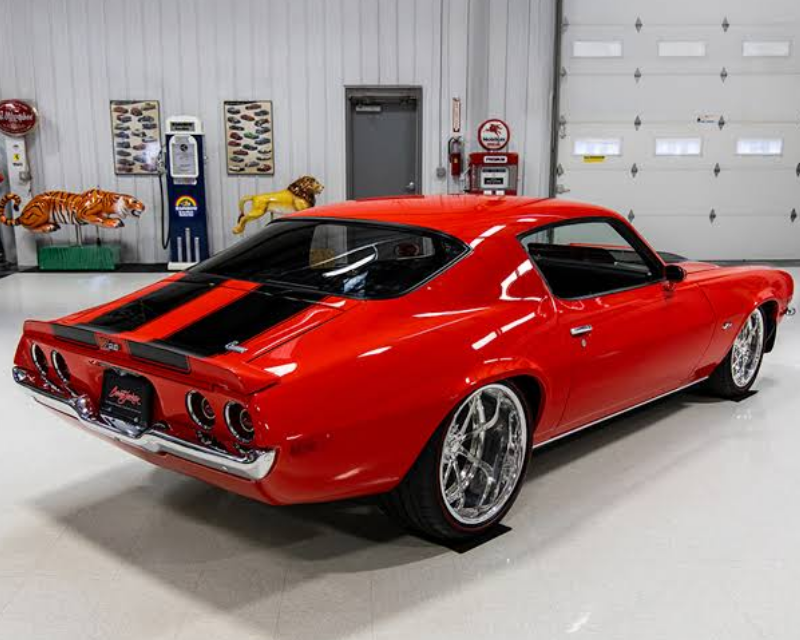
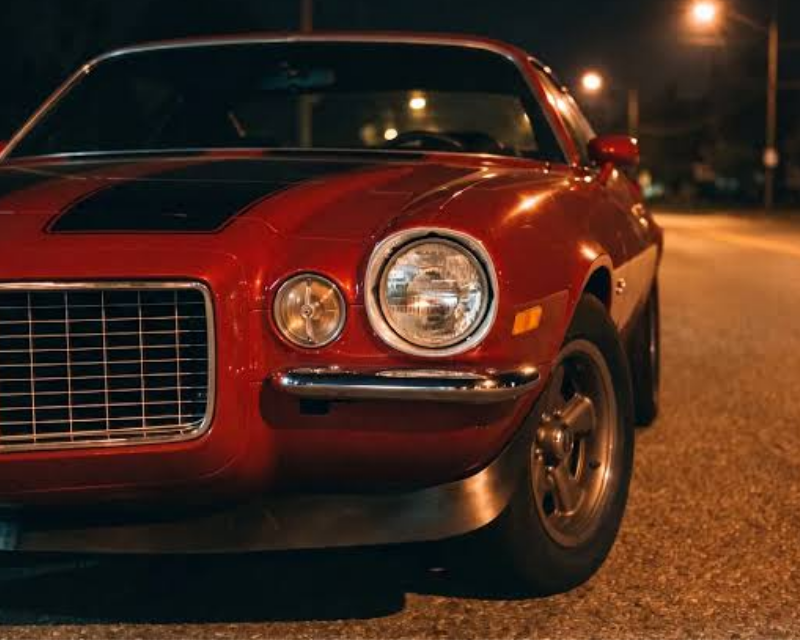
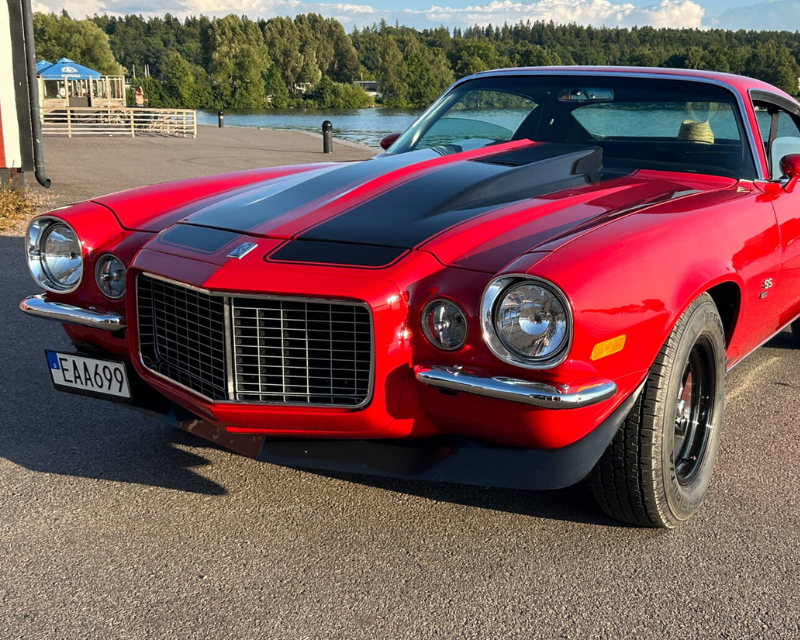
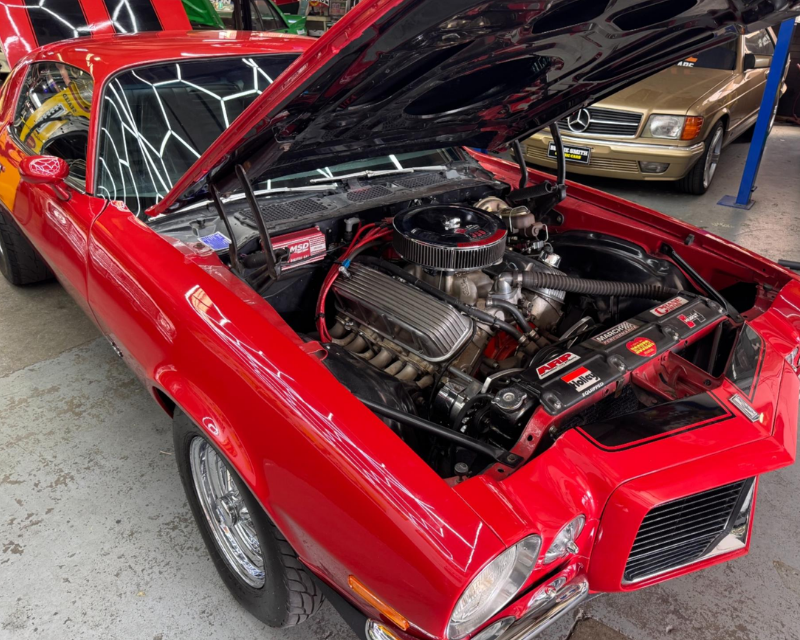
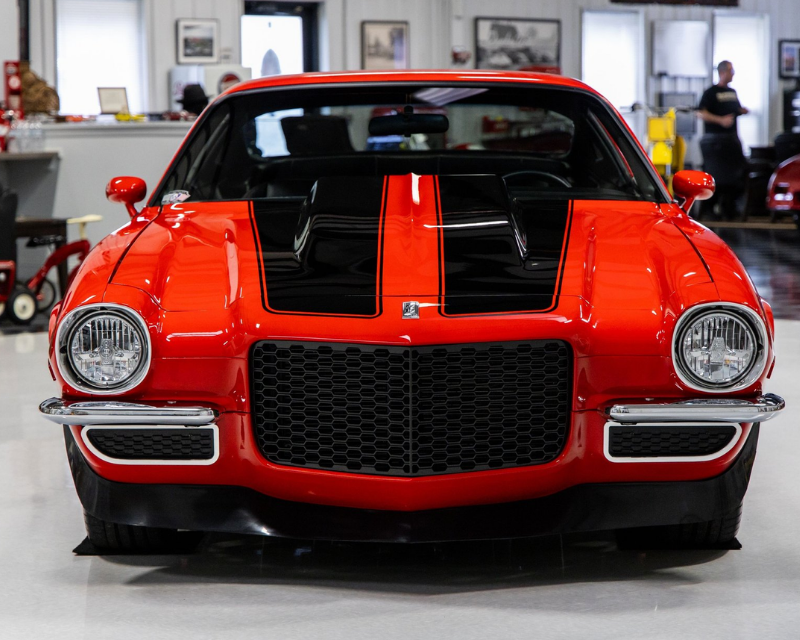
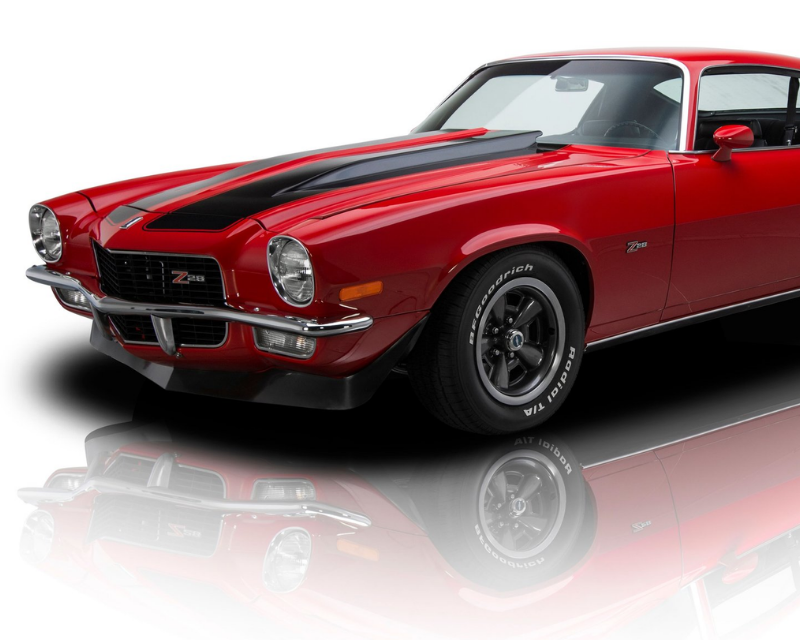
Introduced in mid-1970, the Second-Gen Camaro Z28 dropped the high-revving 302 in favor of the larger 350 cubic-inch LT-1 V8 producing 360 horsepower. Featuring sleek, European-inspired fastback styling (especially the famous "split-bumper" RS package), the 1970½ Z28 offered incredible high-speed stability and handling. Even as emissions regulations choked engine output throughout the mid-1970s, the Z28 remained the stylized king of street cruisers with its bold hood graphics and rear spoilers.
3rd Generation (1982–1992): The Return of Handling Dynamics
After a brief hiatus, the Z28 returned for the 1982 model year with futuristic wedge styling, hatchback versatility, and an emphasis on handling. While early 3rd-Gen engines were restricted by early emissions tech, by the late 1980s, the addition of Tuned Port Injection (TPI) and four-wheel disc brake packages restored real muscle to the chassis, making it a poster car for an entire generation of enthusiasts.
4th Generation (1993–2002): The LT1 & LS1 Horsepower Renaissance
In 1993, Chevy brought raw horsepower back to the Z28 with the 275-hp LT1 V8 derived from the Corvette. Then, in 1998, they installed the legendary all-aluminum LS1 V8. Producing well over 300 horsepower in a sleek, aerodynamic body, the 4th-Gen Z28 was a straight-line terror that could run mid-13-second quarter-mile times right off the showroom floor for a fraction of the cost of European sports cars.
5th Generation (2014–2015): The Ultimate Track Slayer
After a twelve-year absence, Chevrolet resurrected the Z28 badge in 2014 for a limited two-year run, and they did it by returning strictly to the original 1967 philosophy: pure, unadulterated track performance.
Engineered under Chief Engineer Al Oppenheiser, the 2014–2015 Z28 was a street-legal race car. Chevrolet stripped out sound deadening, removed trunk carpeting, made air conditioning optional, and installed a hand-built, naturally aspirated 7.0-liter LS7 V8 pumping out 505 horsepower and 481 lb-ft of torque.
To keep the car planted, Chevy equipped it with massive Brembo carbon-ceramic matrix brakes and revolutionary Multimatic DSSV (Dynamic Suspensions Spool Valve) dampers, technology straight from Formula 1 racing. On test tracks around the world, the 5th-Gen Z28 turned lap times faster than many contemporary European supercars costing three times as much!
What It’s Like Behind the Wheel of a Classic Z28
Slipping into the low-slung bucket seat of an original 1st-Gen or early 2nd-Gen Z28 is a sensory overload for any car lover.
You grip the thin-rimmed steering wheel, pump the gas pedal twice, and twist the ignition key. The high-compression V8 fires to life with a sharp, crisp bark, setting up a mechanical, solid-lifter rhythmic idle that vibrates right through your spine.
Depress the heavy clutch pedal, slot the Muncie shifter into first gear, and roll onto the throttle. Below 3,000 RPM, the car feels tractable and civil. But once you cross 4,000 RPM, the Holley carb secondaries snap wide open, the intake note turns into a deep, booming induction roar, and the engine screams toward 7,000 RPM with astonishing speed.
Unlike standard muscle cars of the 1960s that float and lean uncomfortably in corners, a well-sorted Z28 stays flat, holding a line with surprising tenacity. It demands driver involvement, mechanical sympathy, and active participation. It is driving in its purest, most intoxicating form.
Collector Market Value: An Investment-Grade Classic
If you are looking at the collector market today through an enthusiast or investment lens, original Z28s are blue-chip assets:
1967 Z28s: With only 602 units built, documented numbers-matching 1967 Z28s regularly command well into six figures at major auctions.
1968–1969 Z28s: Highly prized for their Trans-Am racing heritage, factory Cross-Ram dual quad carb setups, and RS (Rally Sport) appearance packages.
1970½ LT-1 Z28s: The peak of 2nd-Gen performance, especially clean split-bumper RS/Z28 models.
2014–2015 LS7 Z28s: With fewer than 1,900 total units produced over its two-year run, the 7.0L LS7 Z28 is widely considered a modern future classic and the ultimate expression of naturally aspirated track-focused American engineering.
Final Thoughts: The Legacy of the Z28
Throughout my nearly 40-year journey across automotive retail, racing mechanics, digital strategy, and media on The AutoHubShow and Cactus Sky, I have always believed that the great vehicles are the ones built with singular vision.
The Chevrolet Camaro Z28 was never meant to be a compromised car designed to please everyone. It was created by passionate engineers who refused to let corporate bans stop them from building a road-racing champion. It brought the spirit of SCCA Trans-Am racing straight to American driveways and gave millions of enthusiasts a reason to fall in love with driving.
Whether it’s the high-pitched metallic scream of a 1967 302 V8 at full chat or the thunderous roar of an LS7 on a modern road course, the Z28 badge will forever represent the golden soul of American performance.