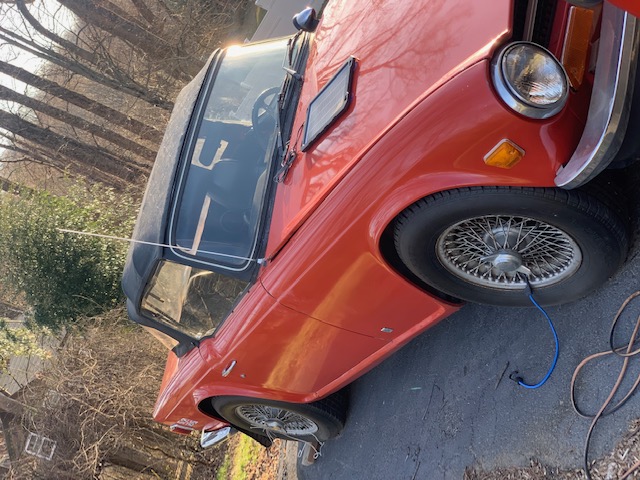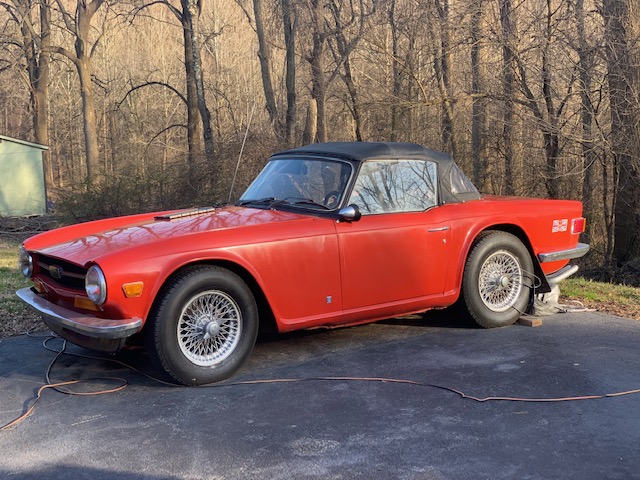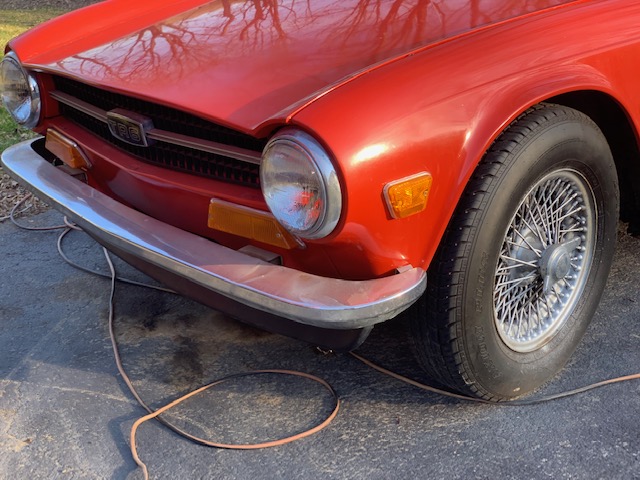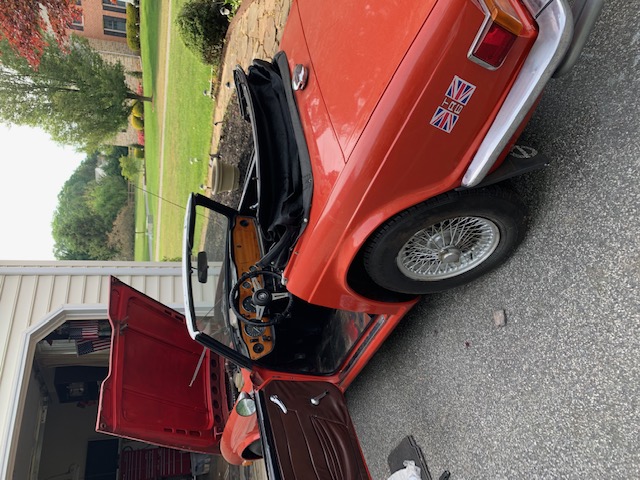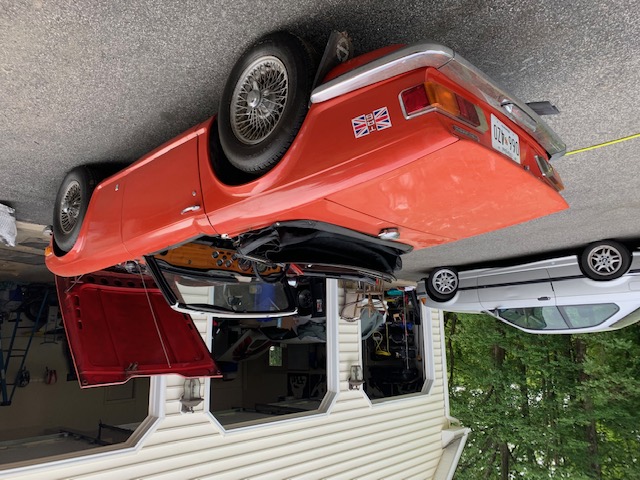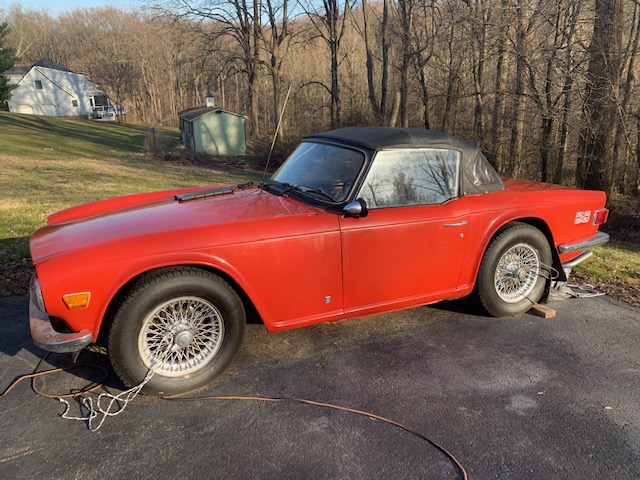


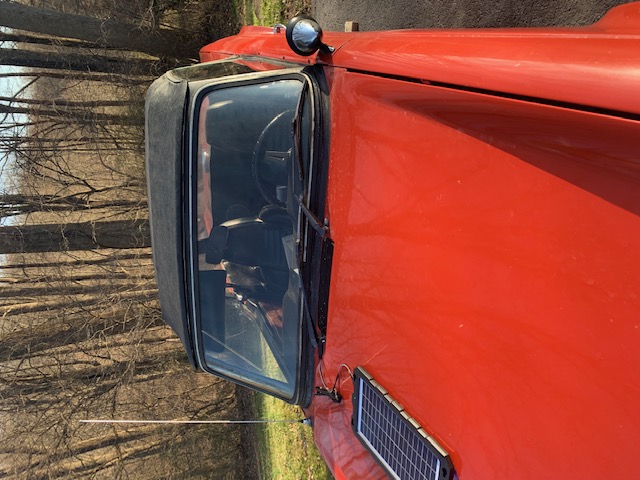
The Triumph TR6 was never about winning a horsepower contest. With its long hood, open cockpit, manual gearbox, and unmistakable straight-six sound, it offered something harder to measure: a connection between driver, car, and road. For me, the TR6 brings back an early lesson from Heinz Werner Bade—that a great car earns its place through balance, feel, and character. Here’s why this British roadster still matters.
Some cars impress you with speed.
Some impress you with technology.
Some impress you because they are rare, expensive, or impossible to ignore.
Then there are cars like the Triumph TR6.
The TR6 does something different.
It reminds you why people fell in love with sports cars in the first place.
Long hood. Short deck. Open cockpit. Manual gearbox. Real gauges. Real steering feel. A straight-six engine with enough torque to make every back road interesting. No screens. No drive modes. No computer trying to filter the experience for you.
Just you, the car, the road, and the sound of that British six-cylinder engine pulling through the gears.
That is what makes the Triumph TR6 special.
I have spent nearly my entire life around cars. I learned performance the old-fashioned way, working around talented mechanics and racers at Timo Race Corp while I was still in high school. Heinz Werner Bade taught me that great cars are not always about raw horsepower. They are about balance, feel, preparation, and how a car communicates with the person behind the wheel.
That is exactly why I appreciate the TR6.
It may not be the fastest British sports car ever built.
It may not be the most exotic.
But it has something many modern cars have lost.
Character.
The Last Great Traditional Triumph Roadster
The Triumph TR6 arrived for the 1969 model year and remained in production until 1976.
By the time it appeared, the Triumph TR line already had a loyal following. The TR2, TR3, TR4, TR5, and TR250 had helped establish Triumph as one of the great British sports car brands, especially in the United States.
The TR6 was not a clean-sheet design.
In many ways, that was part of its charm.
It used the basic structure and mechanical foundation of the TR5 and TR250, but with a sharper, more muscular body restyle by Karmann of Germany. The center section of the car remained familiar, but the front and rear were squared off, giving the TR6 a tougher, more modern personality.
Where the earlier TRs had more rounded elegance, the TR6 looked more aggressive.
It had broader shoulders.
A stronger stance.
A purposeful look.
To me, it was the British roadster growing up without losing its soul.
A Car Built for America
One of the most interesting parts of the TR6 story is how important America was to its success.
Triumph built more than 90,000 TR6s, and the vast majority were exported. The United States became the car’s most important market.
That makes sense.
American buyers loved British roadsters.
They were stylish, affordable, fun, and very different from the larger domestic cars on the road at the time. A TR6 gave drivers something personal. It was a weekend escape machine. It was the kind of car you bought because driving mattered to you.
There were differences between the European and U.S. versions.
In the U.K. and other markets, the TR6 was available with Lucas mechanical fuel injection, giving early cars around 150 horsepower. In the U.S., emissions regulations meant the cars used carburetors and produced less power.
But power numbers do not tell the whole story.
The American-market TR6 may have been down on horsepower compared to its fuel-injected sibling, but it still had the same basic charm: torque, sound, mechanical simplicity, and a driving experience that made even an ordinary road feel special.
The Straight-Six Personality
The heart of the TR6 is its 2.5-liter inline-six.
That engine is a big part of the car’s personality.
It is not a high-revving exotic motor.
It does not need to be.
The TR6 is about torque, sound, and feel.
There is something deeply satisfying about a classic straight-six engine in a lightweight roadster. The delivery is smooth but muscular. It gives the car a more grown-up feel than many four-cylinder British sports cars of the same era.
A good TR6 does not feel delicate.
It feels sturdy.
That is one reason so many enthusiasts still love them today.
The TR6 has an old-school mechanical confidence to it. You feel the engine working. You hear the intake and exhaust. You feel the chassis load up in corners. You are part of the process.
That is what driving used to be.
Independent Rear Suspension and Real Road Feel
One of the underrated parts of the TR6 is its independent rear suspension.
Earlier British sports cars often had more basic rear axle setups, but the TR6 inherited Triumph’s IRS layout. That helped give the car a more sophisticated feel on real roads.
Was it perfect?
No.
Classic British sports cars always come with quirks.
But the TR6 had a nice combination of traditional roadster feel and better handling refinement than many people expected.
This is where my early lessons from Heinz Bade come back to me.
Heinz taught me to look beyond reputation and study the engineering. Some cars get dismissed because they are not perfect. Others get celebrated because people finally understand what made them good.
The TR6 is one of those cars.
It is not perfect.
But when properly sorted, it is incredibly rewarding.
Why the TR6 Was Misunderstood
Like many great enthusiast cars, the TR6 has lived through different reputations.
For years, it was viewed as a fun but somewhat old-fashioned British sports car.
Body-on-frame construction.
Classic Lucas electrical jokes.
Rust concerns.
Oil leaks.
Carburetor tuning.
Cooling issues.
All the usual classic British car conversations.
But here is the thing.
Those quirks are part of the experience, and today, the collector world has become much better at preserving and improving these cars.
Parts support is strong.
The enthusiast community is passionate.
Specialists understand the cars.
Owners know what to look for.
As a result, the TR6 has become one of the most approachable and enjoyable classic British roadsters to own.
It has enough performance to be fun, enough production volume to be usable, and enough character to feel special.
That is a great combination.
A Car That Rewards Involvement
Modern cars are amazing.
They are faster, safer, quieter, more efficient, and more comfortable than anything built in the 1970s.
But many modern cars also isolate the driver.
The TR6 does the opposite.
It invites you in.
You have to shift it correctly.
You have to listen to the engine.
You have to feel the steering.
You have to pay attention.
That involvement is what makes classic cars addictive.
It reminds me of my Porsche 914. That car taught me that horsepower was only part of the story. What mattered was how the car felt, how it responded, and how much trust it built with the driver.
The TR6 has that same quality.
It is honest.
It does not pretend to be something it is not.
It is a classic British roadster with a strong engine, timeless proportions, and enough attitude to make every drive memorable.
The Design Still Works
The more I look at the TR6, the more I appreciate the design.
Karmann did something smart.
They modernized the car without erasing its identity.
The squared-off front and rear gave the TR6 a more aggressive appearance, but the classic British roadster proportions remained intact.
Long hood.
Set-back cockpit.
Short rear deck.
Simple chrome details.
Clean body lines.
It is not overdesigned.
It does not scream for attention.
It has presence without trying too hard.
That is hard to achieve.
Some cars age because they chase fashion.
The TR6 ages well because it stayed true to what it was.
The Collector Market Finally Understands It
For years, the TR6 was one of the more accessible classic sports cars.
That made it attractive to enthusiasts who wanted something fun without entering the higher-priced world of Jaguars, early Porsches, or rare Italian cars.
Today, clean TR6 examples are getting more attention.
Collectors appreciate the combination of style, simplicity, usability, and strong club support.
The best cars are the ones with solid bodies, documented maintenance, properly sorted mechanicals, and tasteful preservation or restoration.
Rust is always a major concern.
So are frame condition, suspension mounting points, electrical systems, fuel systems, and evidence of poor prior repairs.
But a well-maintained TR6 can be a fantastic classic to own.
It is not just a car to park and admire.
It is a car to drive.
That matters.
Why the TR6 Still Connects
The Triumph TR6 represents a type of car we do not see much anymore.
It is mechanical.
It is simple.
It is emotional.
It is imperfect in the best possible way.
You do not drive a TR6 because it is the fastest car available.
You drive one because it makes you feel connected.
Connected to the road.
Connected to the machine.
Connected to a time when sports cars were light, open, engaging, and full of personality.
That is why the TR6 still matters.
It reminds us that great driving does not require massive horsepower or modern technology.
Sometimes all it takes is a straight-six engine, a manual gearbox, an open road, and a car with enough soul to make you want to keep driving.
What the TR6 Teaches Us
Every car has a lesson.
The TR6 teaches us that simplicity still has value.
It teaches us that character matters.
It teaches us that a car does not have to be flawless to be loved.
And for me, it reinforces something I learned early in life around people like Heinz Bade.
A great car is not always defined by what the spec sheet says.
It is defined by how it makes you feel.
The Triumph TR6 makes people feel something.
That is why enthusiasts still love it.
That is why collectors still search for good ones.
That is why it continues to earn respect decades after production ended.
The TR6 is not just a British roadster.
It is one of the great reminders of why we became car people in the first place.