

From Hans Mezger’s race-proven dry-sump flat-six to Le Mans double-wishbone suspension: The history, engineering philosophy, and driving obsession behind the Porsche 911 GT3.
If you want to understand who I am as an automotive enthusiast, you have to understand my roots with the Porsche brand. Long before I became a new car dealer, founded CactusSky Digital, or co-hosted The AutoHubShow, my passion for automobiles was forged in a specialized racing garage during my high school years.
I had the extraordinary privilege of working at Timo Race Corp under Heinz Werner Bade, one of the most respected and revered Porsche mechanics in American motorsport history. Heinz was world-renowned for his mechanical wizardry on air-cooled engines and his race-preparation work alongside Bruce Jennings, the legendary "King Carrera."
Under Heinz’s rigorous, uncompromising guidance, I didn't just learn how to turn wrenches; I learned the fundamental philosophy behind Porsche performance. I learned about precision tolerances, dry-sump lubrication systems, suspension geometry, thermal management, and the relentless quest for efficiency. While still in high school, I bought my first Porsche, a modest 914 and working alongside Heinz late into the night, we transformed that car into one of the sharpest, fastest, and best-performing Porsche 914s in the region.
That early foundation instilled in me an indelible standard for what a sports car should be. And in the modern automotive landscape, no vehicle embodies that race-bred engineering philosophy more completely than the Porsche 911 GT3.
The Origin Story: Hans Mezger and the Birth of a Track Icon
To appreciate the lineage of the 911 GT3, you have to rewind to 1999 and the launch of the 996-generation GT3.
In the late 1990s, Porsche was transitioning from air-cooled engines to water-cooled architectures. Purists were anxious, fearing that Porsche’s road cars would lose their raw motorsport edge. To prove that water cooling could thrive in the crucible of endurance racing, legendary Porsche engine designer Hans Mezger developed an engine that would go down in history as one of the greatest powerplants ever built: the "Mezger engine."
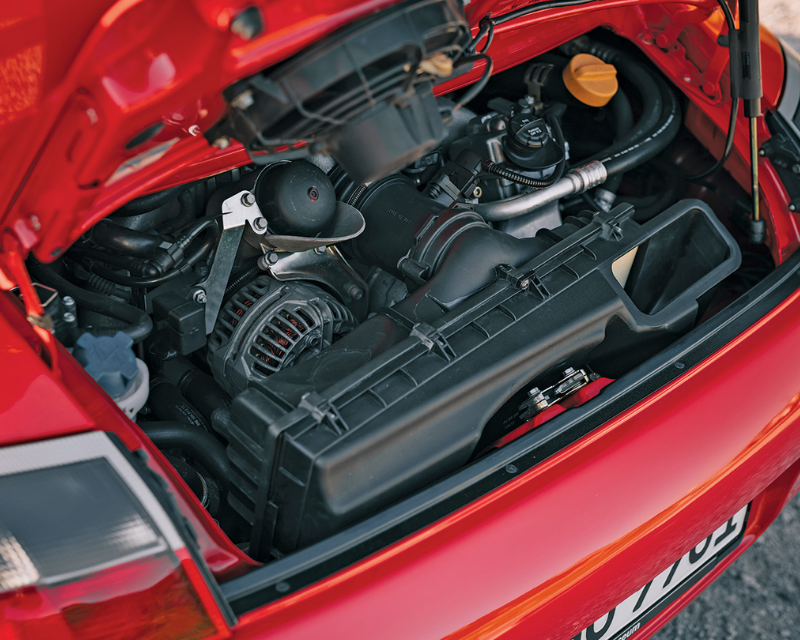
Unlike the standard water-cooled M96 engines used in entry-level 996 Carrera models, the original GT3 engine utilized a true split aluminum crankcase derived directly from the air-cooled 964/993 architecture and the Le Mans-winning Porsche 911 GT1 race car. It featured an integrated dry-sump oiling system with multi-stage scavenge pumps, ensuring uninterrupted oil pressure during violent, high-G track cornering.
When the 996 GT3 debuted under the direction of Porsche Motorsport chief Roland Kussmaul, it wasn't designed as a plush grand tourer. It was a homologation special created to satisfy FIA GT3 racing regulations. It came without rear seats, stripped of heavy sound insulation, fitted with stiffer springs, adjustable anti-roll bars, and a high-revving 3.6-liter naturally aspirated flat-six. It was an instant benchmark for driver engagement.
The Generations: Evolution of a Benchmark
Over four distinct generations and multiple sub-variants, Weissach’s Motorsport division has continuously refined the GT3 recipe without ever diluting its core mission.
- The 996 Generation (1999–2005): The Raw Pioneer
Engine: 3.6-liter naturally aspirated "Mezger" Flat-Six
Power: 360 hp (996.1) / 381 hp (996.2)
Highlights: Pure, analogue driving. No electronic stability control, no traction control safety nets, and a mandatory 6-speed manual transmission. It required driver skill, Sympathy, and precision to master. - The 997 Generation (2006–2011): The Hydraulic Steering Pinnacle
Engine: 3.6-liter (315 hp) expanded to 3.8-liter (435 hp) and culminating in the mythical 4.0-liter GT3 RS (500 hp)
Highlights: Widely considered by purists as one of the greatest sports cars ever crafted. Featuring telepathic hydraulic steering feedback, active suspension management (PASM), and central-locking wheels on later models, the 997 GT3 offered an unrivaled connection between front tires and driver palms. - The 991 Generation (2014–2019): The 9,000-RPM Symphony
Engine: 3.8-liter (475 hp) evolving into the bespoke 4.0-liter (500 hp)
Highlights: The 991.1 introduced Porsche's lightning-fast PDK dual-clutch transmission and rear-wheel steering. While PDK set blistering lap records, public demand from purists was so overwhelming that Porsche brought back a six-speed manual gearbox for the 991.2 generation. The engine was upgraded to a stiffened valve train utilizing rigid rocker arms, allowing a screaming 9,000 RPM redline. - The 992 Generation (2021–Present): The Le Mans Suspension Breakthrough
Engine: 4.0-liter atmospheric Flat-Six (502 hp / 346 lb-ft torque)
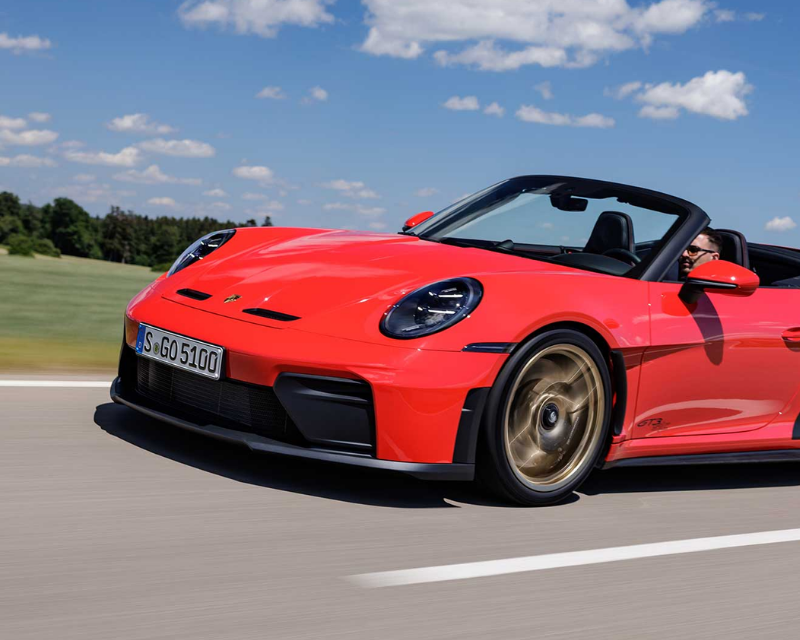
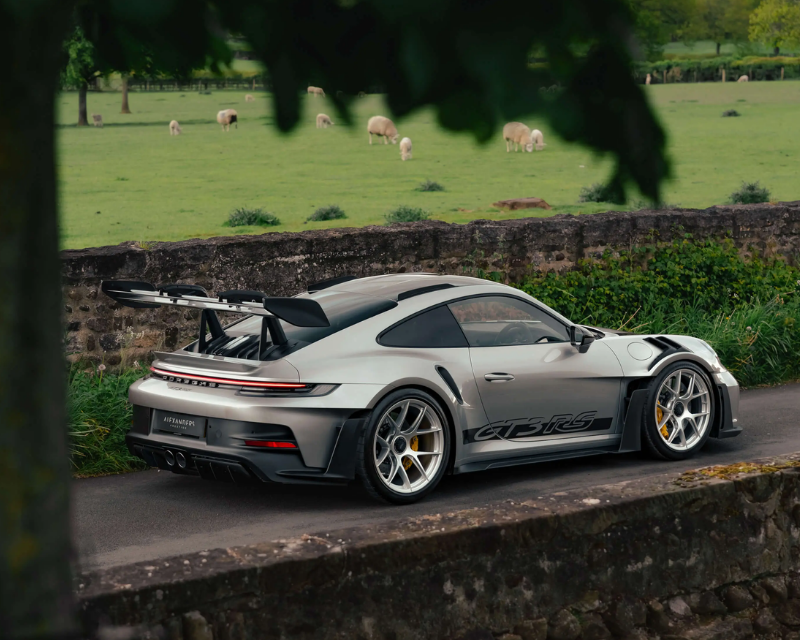
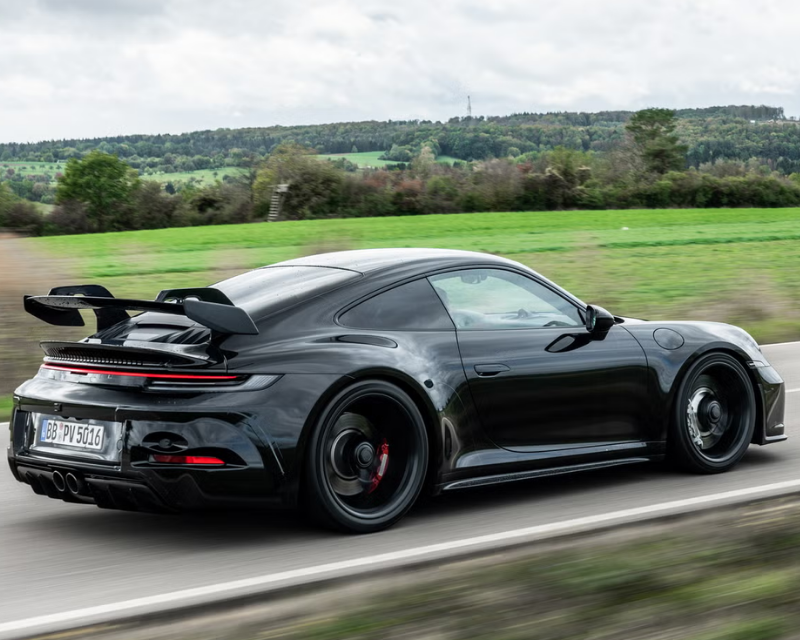
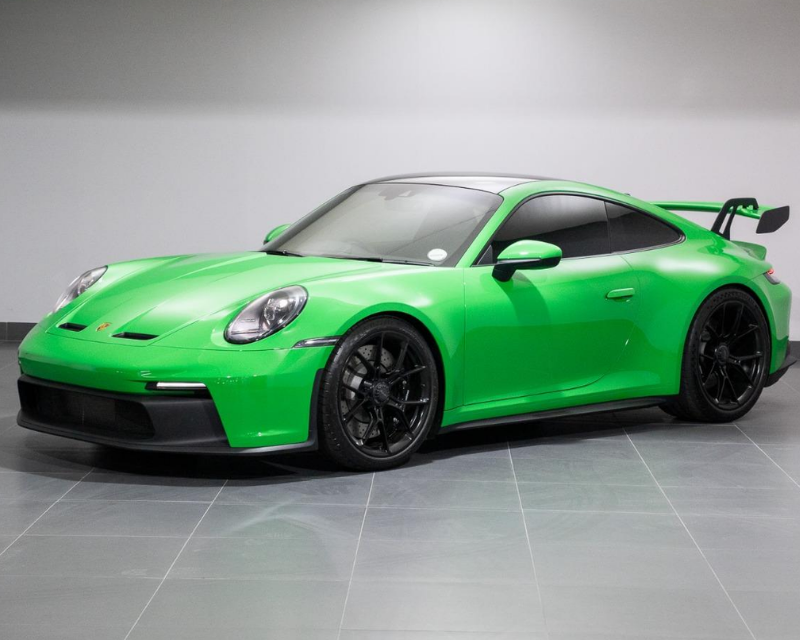
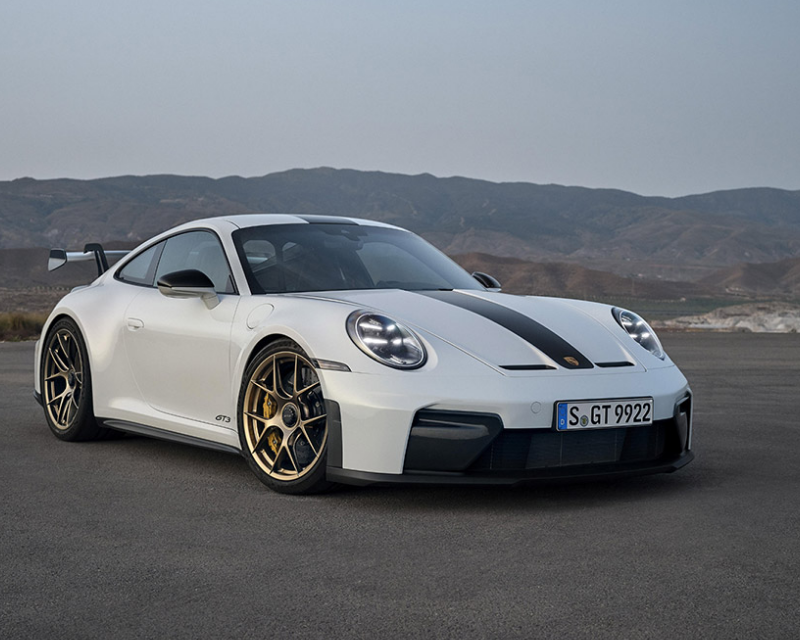
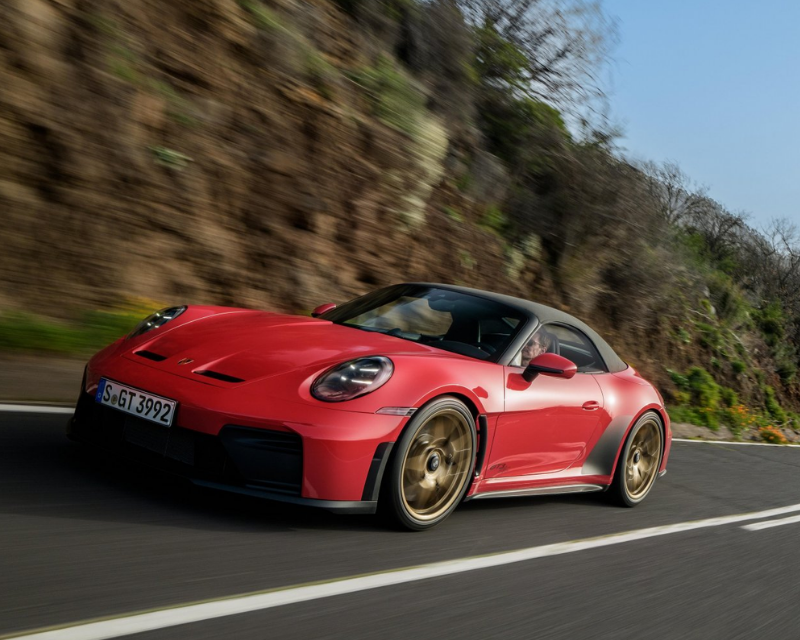
Highlights: The current 992 GT3 executed the biggest front-suspension redesign in 911 history. Replacing the traditional MacPherson strut front setup used on every street 911 since 1963, Porsche installed a double-wishbone front suspension derived directly from the 911 RSR Le Mans race car. Combined with a top-mounted swan-neck rear wing, the 992 GT3 generates massive aerodynamic downforce without sacrificing high-speed drag. - The Heartbeat: The Naturally Aspirated 4.0-Liter Flat-Six
In an industry dominated by turbochargers that muffle exhaust notes and artificial power curves, the heart of the modern 992 GT3 is an absolute masterpiece of mechanical engineering.
The 4.0-liter naturally aspirated flat-six utilizes six individual throttle bodies—one for each cylinder—delivering instant, telepathic throttle response the microsecond you press the accelerator. - Key Technical Specs That Enthusiasts Respect:
Redline: 9,000 RPM
Power Output: 502 hp @ 8,400 RPM | 346 lb-ft Torque @ 6,100 RPM
Oil System: Fully dry-sump with 7 scavenge stages, ensuring critical engine components are lubricated under continuous 1.5+ G lateral loads.
Valvetrain: Solid rocker arms with DLC (Diamond-Like Carbon) coating, eliminating hydraulic lash adjusters for ultimate high-RPM valvetrain stability.
Exhaust: Stainless steel lightweight sport exhaust system with central dual tailpipes that transforms from a deep flat-six metallic thack at low revs into an intoxicating, race-car wail as you cross 8,000 RPM.
The Chassis & Aerodynamics: Born on the Track
Having learned race setup under Heinz Werner Bade, I can tell you that making a rear-engined car handle neutral through high-speed turns requires extraordinary suspension geometry and aerodynamic balance.
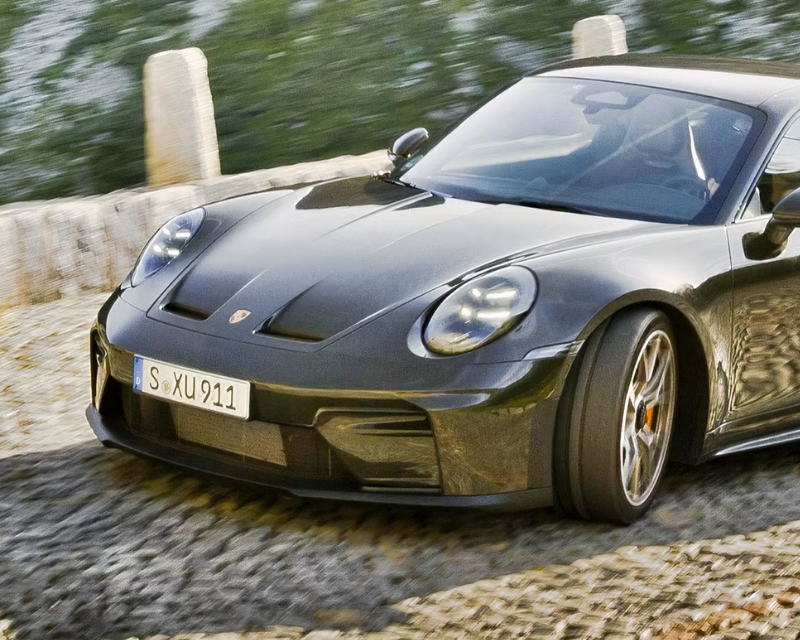
The 992 GT3’s double-wishbone front suspension eliminates camber flex under heavy cornering loads. This keeps the front tire tread flat against the pavement, completely eliminating turn-in push and delivering levels of front-end grip previously reserved for dedicated slick-shod GT3 Cup race cars.
The iconic swan-neck rear wing hangs the wing blade from above rather than supporting it from underneath. Because the underside of an airfoil generates the majority of downforce, keeping that lower surface clean of brackets increases aerodynamic efficiency and downforce by over 50% compared to its predecessor—without adding drag.
For stopping power, Porsche offers massive steel rotors or optional PCCB (Porsche Ceramic Composite Brakes). Featuring yellow multi-piston calipers biting carbon-fiber-reinforced ceramic discs, PCCB sheds unsprung weight at all four corners while offering virtually fade-free stopping power session after session on track.
What It’s Like Behind the Wheel: Sensory Perfection
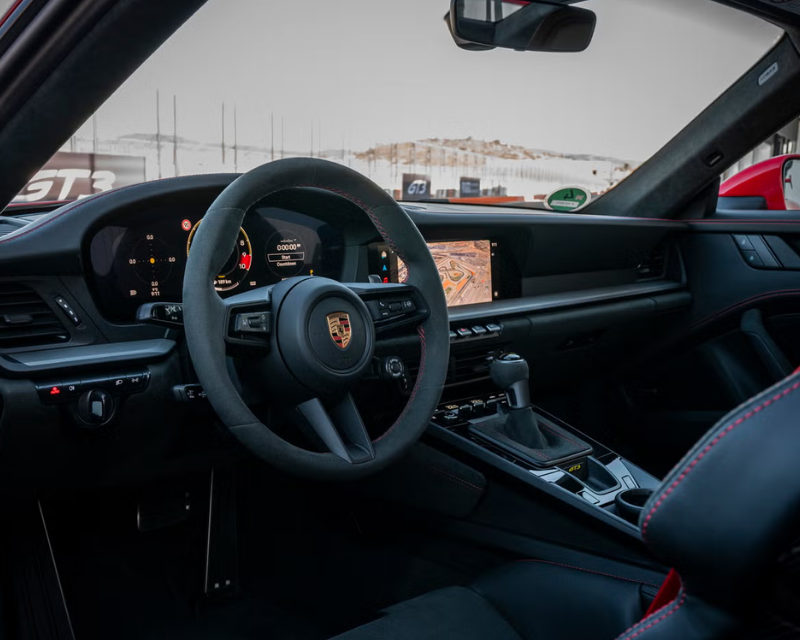
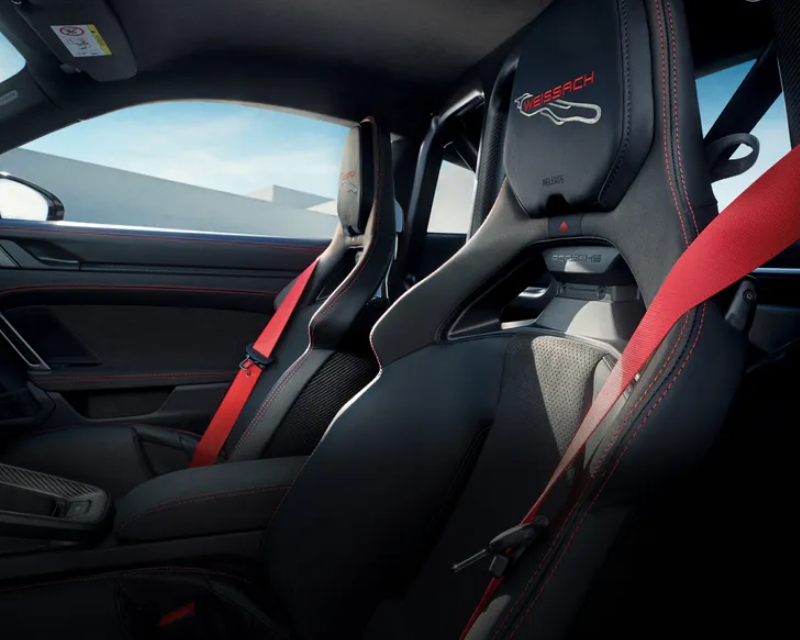
Slipping into the cockpit of a 911 GT3, everything feels purposeful. There are no gimmick buttons or unnecessary distractions. You sit low in carbon-fiber full bucket seats, gripping a GT sport steering wheel wrapped in tactile Race-Tex suede.
If you choose the 6-speed GT sports manual transmission, the shift lever is short, weighted, and slots into gear with rifle-bolt precision. If you choose the 7-speed PDK, gear changes happen in milliseconds with zero interruption in power flow.
Turning the ignition key on the left side of the steering wheel (a nod to Porsche’s historic Le Mans running starts) brings the 4.0-liter engine to life. It idle with a mechanical, metallic chatter that lets you know every valve and rocker arm means business.
On an open stretch of road or a sweeping race circuit, accelerating through the gears in a GT3 is a religious experience for any car lover.
From 3,000 to 6,000 RPM, the acceleration is strong, linear, and immediate. But as the tachometer needle sweeps past 7,000 RPM, the exhaust note changes pitch, transforming into a screaming mechanical symphony. Between 8,000 and 9,000 RPM, the sound fills the cabin with raw motorsport energy that reverberates through your chest.
Steering precision is unmatched; every subtle ripple in the pavement, every change in road camber, and every grain of asphalt texture is communicated straight through your palms. The car turns in with zero hesitation, rotates cleanly around its center, and uses its rear-engine weight bias to rocket out of corners with astonishing traction.
Collector Value & Legacy
Throughout its history, the Porsche 911 GT3 has maintained incredible value retention in the collector market:
- 996 GT3 & GT3 RS: Fast-appreciating classics valued for their raw, driver-dependent nature and Mezger engine roots.
- 997.2 GT3 3.8 & 4.0 RS: Considered blue-chip investment assets, with low-mileage 4.0 RS models fetching massive sums at elite international auctions.
- 991.2 Manual & Touring Package: Highly sought-after for combining the 9,000-RPM 4.0-liter engine with a discrete, wingless body profile and manual gearbox.
- 992 GT3: Consistently trading well above original MSRP due to extreme global demand and its Status as one of the final naturally aspirated high-RPM supercars of our era.
Final Thoughts: The Benchmark of Automotive Emotion
When I reflect on my journey through the auto industry—from learning precision race prep under Heinz Werner Bade at Timo Race Corp, to my years as a dealer principal, to producing content on The AutoHubShow and CactusSky—I am constantly reminded that specs on a sheet paper don't make a car great. Emotion does.
The Porsche 911 GT3 is a triumph because it refuses to compromise its soul. It doesn't rely on synthetic trickery; it relies on race-proven engineering, atmospheric combustion, aerodynamic science, and an obsessive focus on driver involvement. It is an instrument of pure joy, built by enthusiasts, for enthusiasts.
As long as there are roads to carve and lap times to chase, the GT3 will remain the golden standard by which all other sports cars are measured.
What are your memories or thoughts about the Porsche 911 GT3? I'd love to hear your story.