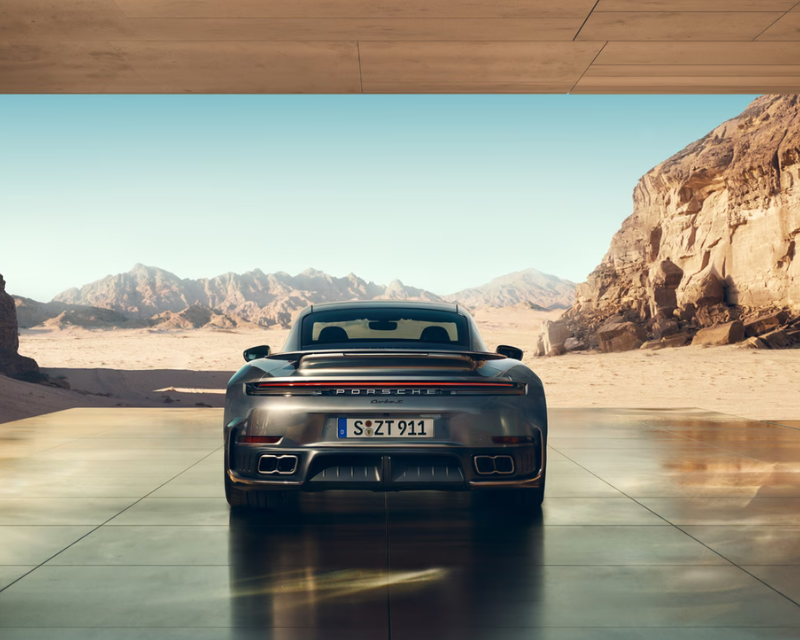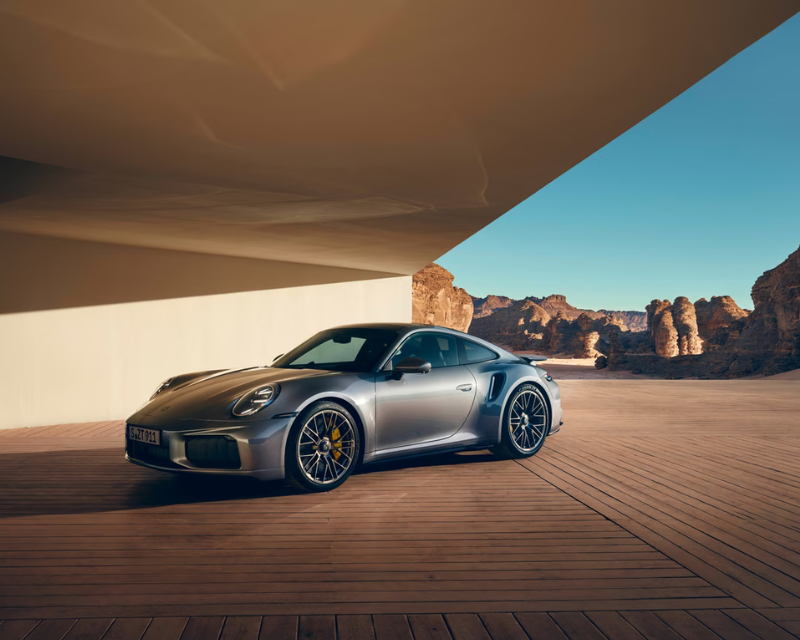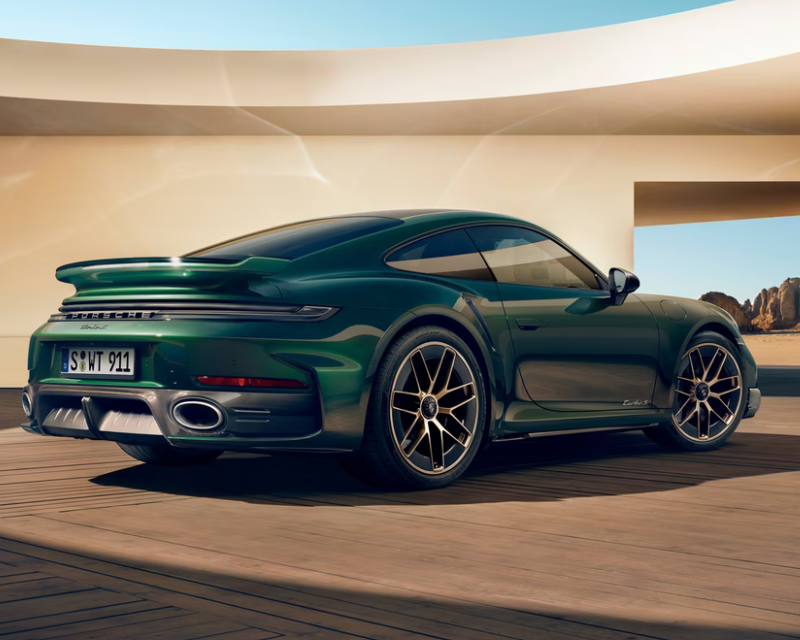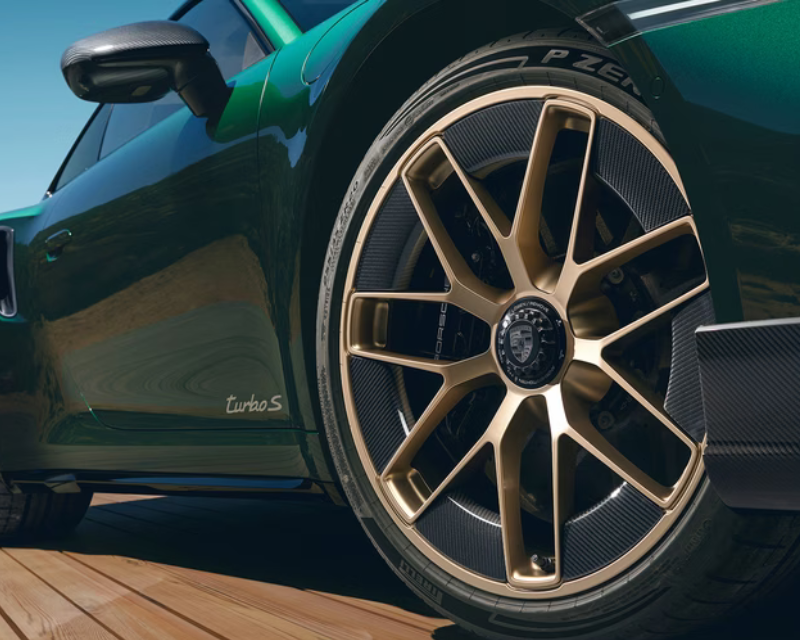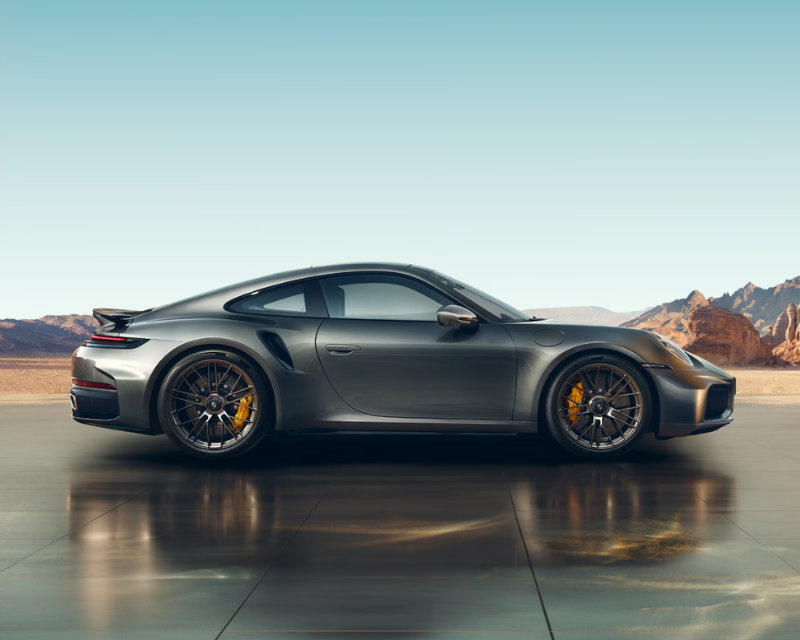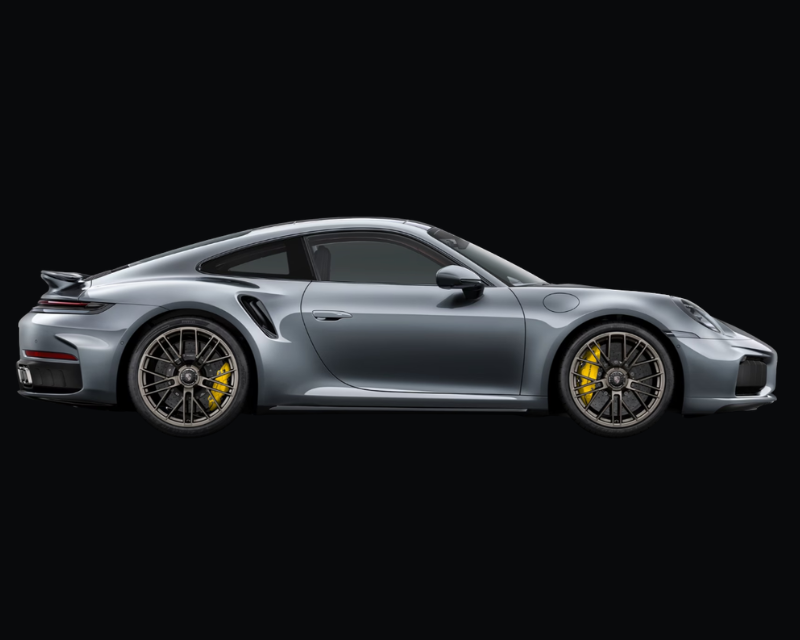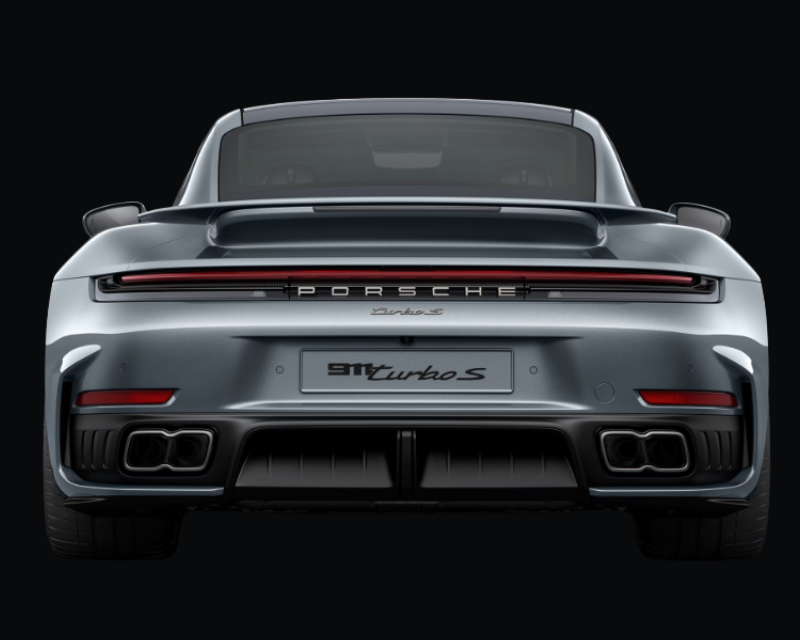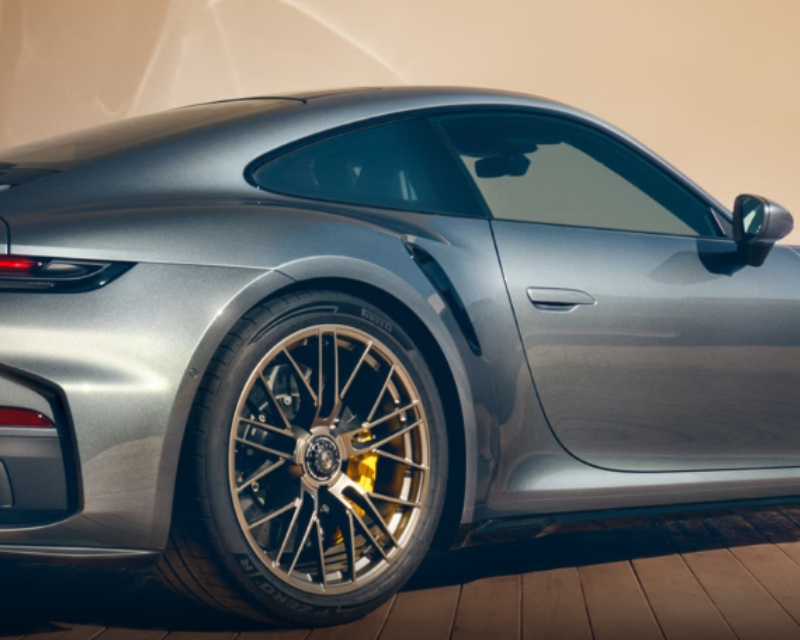


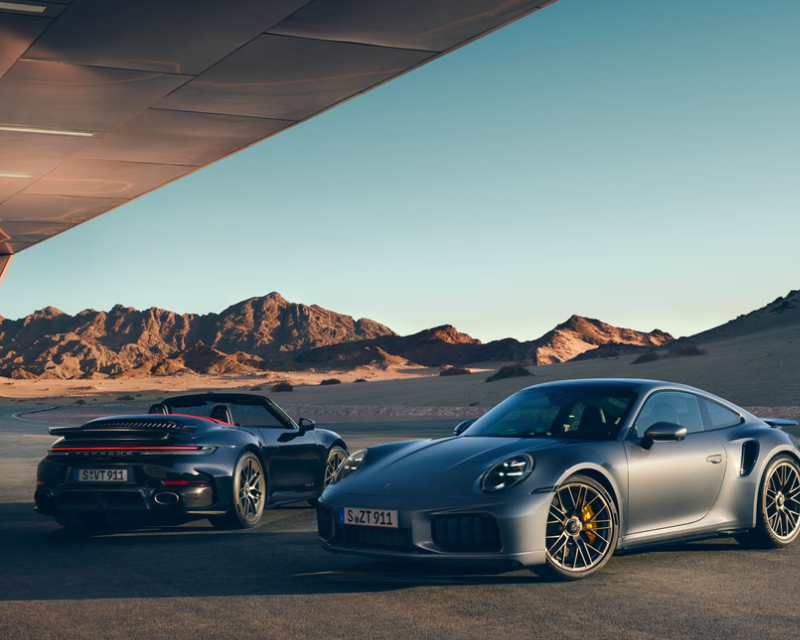
From the infamous 930 “Widowmaker” to today’s 640-horsepower 992, the Porsche 911 Turbo S represents five decades of relentless engineering. Combining physics-defying acceleration, all-weather capability, luxury, and everyday usability, it remains the ultimate everyday supercar—and the undisputed benchmark of effortless speed.
In the rarefied world of high-performance supercars, there are fast cars, there are exotic cars, and then there is the Porsche 911 Turbo S.
For five decades, the 911 Turbo has stood as Zuffenhausen's flagship statement of technological supremacy. While rival supercar manufacturers produce fragile, high-strung exotics that require delicate handling and frequent garage maintenance, Porsche engineered the 911 Turbo S to do something seemingly impossible: combine hypercar-beating acceleration with rock-solid, rain-or-shine daily usability. It is a car that can comfortably haul groceries on a rainy Tuesday morning and then humiliate exotic mid-engine supercars on a drag strip or track session that same afternoon.
My deep connection to the Porsche brand goes back to my high school days working under Heinz Werner Bade at Timo Race Corp. Heinz, who prepared championship-winning air-cooled racing engines for legends like Bruce Jennings, taught me to respect forced-induction engineering when turbocharging was still in its infancy. In those days, turbocharging was a wild, unpredictable frontier. Watching Porsche master turbocharging on the racetrack in monsters like the 1,100-horsepower Porsche 917/30 Can-Am car and translate that technology into the original 1975 930 Turbo instilled in me a lifelong fascination with boosted performance.
The modern 992-generation Porsche 911 Turbo S represents the absolute pinnacle of that fifty-year evolution. It is a masterclass in aerodynamic efficiency, forced induction precision, and raw, physics-defying speed.
The Lineage: From "Widowmaker" to Precision Instrument
To understand the modern Turbo S, you have to appreciate the dramatic evolution of its lineage.
1. The 930 Turbo (1975–1989): The Raw Legend
When Porsche introduced the 930 Turbo in 1975, it was a terrifying, beautiful beast. Featuring a single massive KKK turbocharger feeding a 3.0-liter (and later 3.3-liter) flat-six, the 930 earned the infamous nickname "The Widowmaker." Turbo lag was substantial: below 3,500 RPM, the engine felt docile, but once the boost hit, all 282 (or 300) horsepower hit the rear tires simultaneously with violent force. If an inexperienced driver lifted off the throttle mid-corner, trailing-throttle oversteer would snap the tail out in an instant. It required absolute respect and expert car control.
2. The 964 & 993 Turbo (1990–1998): The All-Wheel Drive & Twin-Turbo Breakthrough
964 Turbo (1990–1994): Refined the chassis and introduced the ultra-rare 3.6-liter Turbo S variants.
993 Turbo (1995–1998): A watershed moment in Porsche history. The 993 Turbo introduced twin turbochargers (one smaller turbo for each cylinder bank to minimize lag) and all-wheel drive. It was the final air-cooled Turbo, producing 400 horsepower (424 hp in the Turbo S) and establishing the twin-turbo AWD blueprint that defines the model to this day.
3. The Water-Cooled Era (996, 997, and 991 Generations)
996 Turbo / Turbo S (2001–2005): Powered by the bulletproof 3.6-liter "Mezger" twin-turbo engine derived from the Le Mans-winning GT1 race car. It was virtually indestructible and capable of handling massive aftermarket tuning.
997 Turbo / Turbo S (2007–2013): Introduced revolutionary Variable Turbine Geometry (VTG) turbochargers—a world-first for a gasoline engine—eliminating turbo lag almost entirely.
991 Turbo S (2014–2019): Added rear-wheel steering, active aerodynamics, and launch control systems that made 0-to-60 mph sprints in 2.6 seconds a repeatable, effortless reality.
The Engineering Titan: Under the Skin of the 992 Turbo S
The current 992-generation 911 Turbo S isn't just an incremental update; it is an engineering masterpiece capable of generating performance numbers that leave seasoned automotive journalists speechless.
1. The 3.7-Liter Twin-Turbo Flat-Six
At the heart of the 992 Turbo S lies a completely redesigned 3,745 cc boxer engine equipped with larger, symmetrical Variable Turbine Geometry (VTG) turbochargers.
VTG technology utilizes adjustable guide vanes inside the turbocharger housing. At low engine speeds, the vanes close to increase exhaust gas velocity, spooling the turbos instantly and eliminating low-end lag. At high engine speeds, the vanes open to maximize airflow and prevent backpressure.
Horsepower: 640 hp @ 6,750 RPM
Torque: 590 lb-ft @ 2,500–4,000 RPM
Transmission: 8-Speed dual-clutch PDK recalibrated with reinforced gear sets to handle the immense torque.
2. Porsche Traction Management (PTM) & Active Aerodynamics
Putting 590 lb-ft of torque down to the pavement without spinning four tires requires intelligent power distribution. The Porsche Traction Management (PTM) active all-wheel-drive system features an electronically controlled, water-cooled front differential clutch capable of transferring up to 368 lb-ft of torque to the front wheels within milliseconds if the rear tires detect slip.
Complementing the drivetrain is Porsche Active Aerodynamics (PAA):
Pneumatic Front Spoiler: A three-stage flexible rubber front lip extends outward at speed to press the front nose to the pavement.
Active Rear Wing: A massive rear wing extends upward and tilts dynamically, serving as both an aerodynamic downforce generator and an airbrake under hard braking at high speeds.
Breathtaking Numbers: Physics Under Siege
To truly grasp what the 992 911 Turbo S is capable of, you have to look at independent instrumented test data:
0 to 60 MPH: 2.6 seconds (Official Porsche) / 2.2 seconds (Tested in real-world magazine tests)
0 to 100 MPH: 5.3 seconds
Quarter-Mile: 10.1 seconds @ 137 MPH
Top Speed: 205 MPH
Think about those numbers for a moment. A 0-to-60 time of 2.2 seconds puts the 911 Turbo S in the same acceleration tier as multi-million-dollar hypercars, all while offering heated leather seats, adaptive cruise control, a pristine Burmester sound system, and a usable front trunk.
Driving Experience: Launch Control & The Warp-Speed Reality
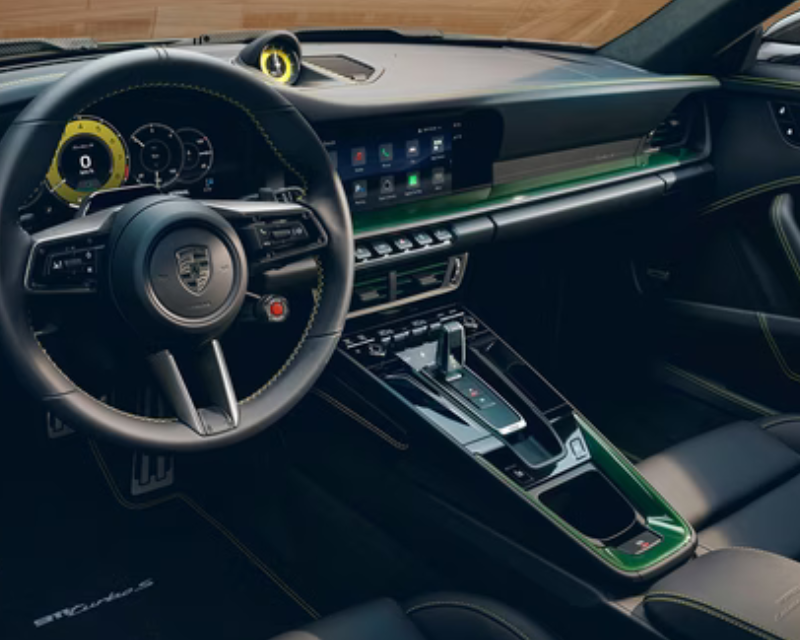
Slipping into the cabin of the 992 Turbo S, you are greeted by an environment that blends handcrafted luxury with technical precision. The wide-body hips—2.0 inches wider up front and nearly 1.0 inch wider at the rear compared to a standard Carrera—fill your side mirrors, reminding you of the muscular footprint beneath you.
To experience the full wrath of the Turbo S, you engage Sport Plus mode, press your left foot hard on the brake pedal, and bury your right foot on the accelerator.
The engine revs to 4,000 RPM, the VTG turbos spool up building boost against the hold, and a notification flashes on the digital display: Launch Control Active.
When you release the brake pedal, the launch is nothing short of violent. There is no tire smoke, no dramatic axle tramp, and no hesitation. The AWD system grips the asphalt like an iron vice, throwing your head back hard against the headrest with over 1.0 G of longitudinal force. Shift changes from the 8-speed PDK feel like rifle shots, snapping into the next gear without dropping a single millisecond of acceleration. Before your brain can fully process what just happened, you have blown past 100 mph.
Yet, what makes the Turbo S truly special is its dual personality.
Switch the rotary drive-mode dial back to "Normal," and the exhaust valves close, the MagneRide suspension softens, and the car transforms into a quiet, smooth, civilized luxury GT. It negotiates pitted city streets, heavy highway traffic, and long road trips with total grace. It is the ultimate stealth weapon.
GT3 vs. Turbo S: Two Distinct Philosophies
Enthusiasts often ask me: "Webdoc, if you had to choose between a 911 GT3 and a 911 Turbo S, which one takes the crown?"
Having spent my life studying racing dynamics under Heinz Werner Bade and testing vehicles across every segment, my answer comes down to intent:
The 911 GT3 is a high-revving, 9,000-RPM, naturally aspirated track scalpel. It is built for the purist who wants a manual gearbox, visceral engine sound, light weight, and the rewarding challenge of chasing ideal lap times on a dry race circuit.
The 911 Turbo S is an unstoppable force of nature. It is built for the driver who wants devastating, effortless, all-weather speed, mid-range torque that pins you to your seat at any speed, and supercar capability wrapped in a luxury daily driver package.
They are two sides of the same glorious Porsche coin, engineered for different missions, but both executed at the highest level of human capability.
Collector Market Value & Legacy
As investment assets, early 911 Turbos have reached legendary status:
Classic Air-Cooled Turbos (930, 964, 993): Blue-chip investment grade. Original, low-mileage 993 Turbo S models command astronomical prices at global auctions.
996 Turbo (Mezger): Recognized as one of the best value-for-money entry points into true supercar performance, with clean manual transmission examples rapidly appreciating.
Modern Turbo S (991 / 992): Highly prized for their brutal reliability, holding resale values far better than European exotic competitors.
Final Thoughts: The Apex of Automotive Engineering
Throughout my nearly 40 years across automotive retail, racing mechanics, digital strategy, and media production on The AutoHubShow and Cactus Sky, I have driven almost everything on four wheels.
The Porsche 911 Turbo S remains the undisputed master of its craft. It doesn't rely on theatrical drama or delicate fragility to prove its point. It relies on relentless engineering, forced-induction mastery, and an unwavering commitment to quality.
Fifty years after the original 930 Turbo shocked the world, the 911 Turbo S remains what it has always been: the ultimate everyday supercar, and a shining triumph of human engineering.
What are your memories or thoughts about the Porsche 911 Turbo S? I'd love to hear your story.
(Content verified and enhanced by: hrizn Learn more at: https://hrizn.io/?via=ian)