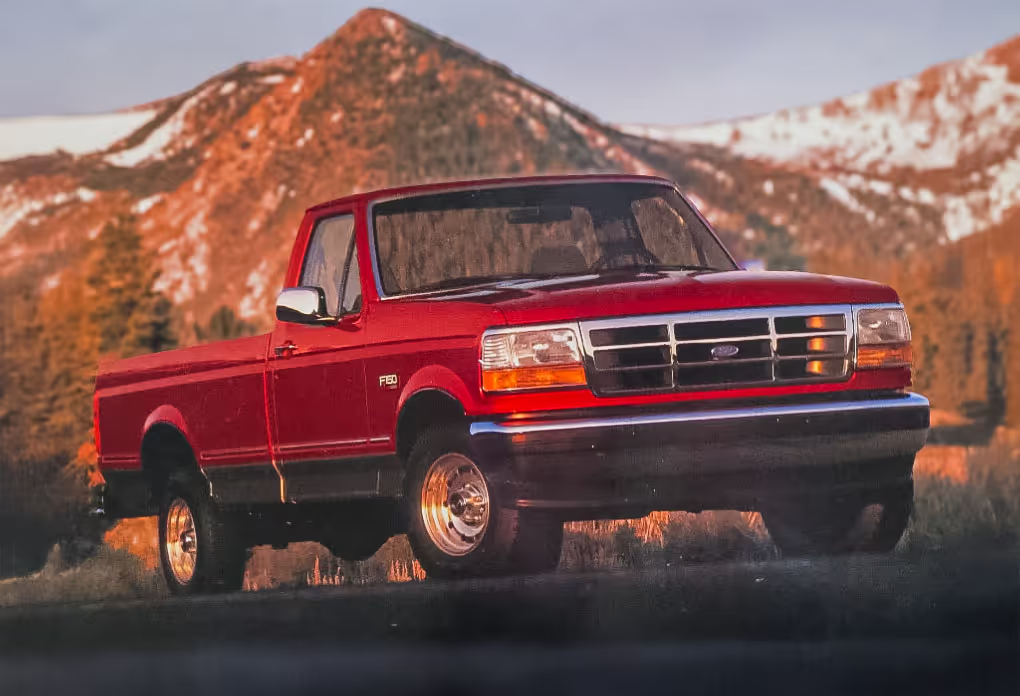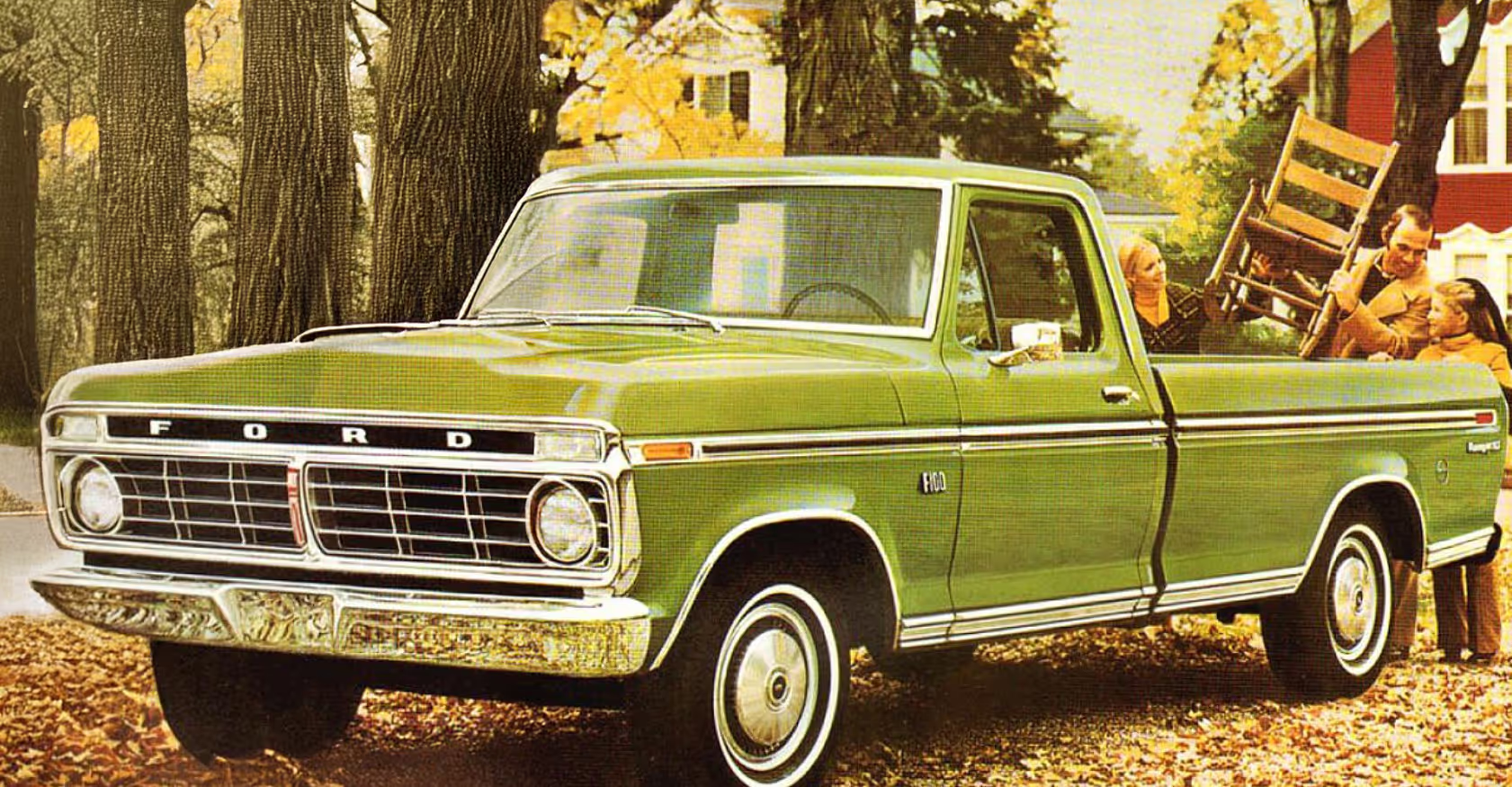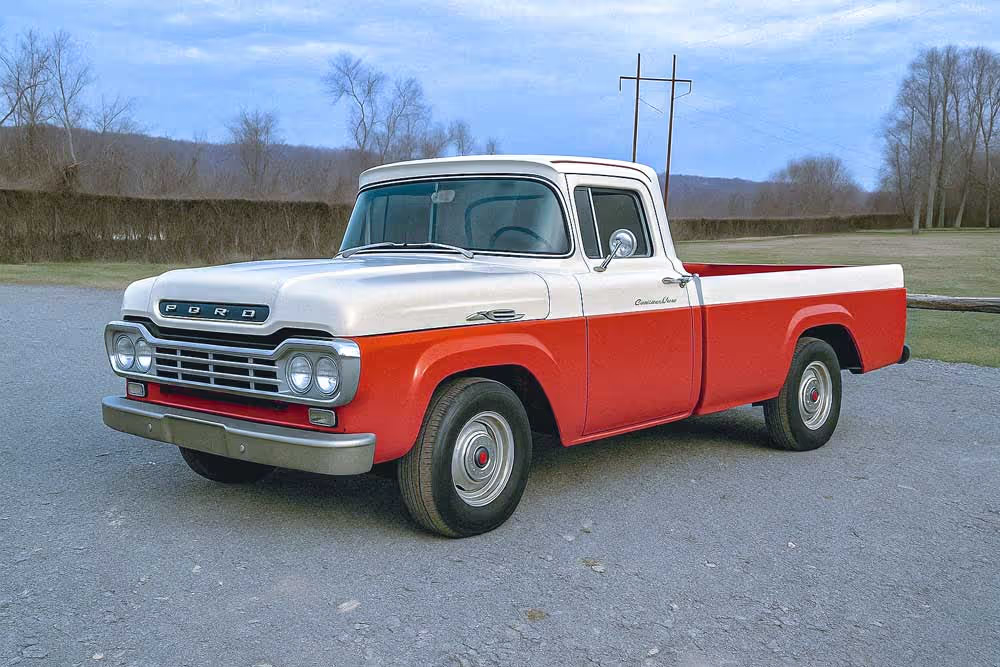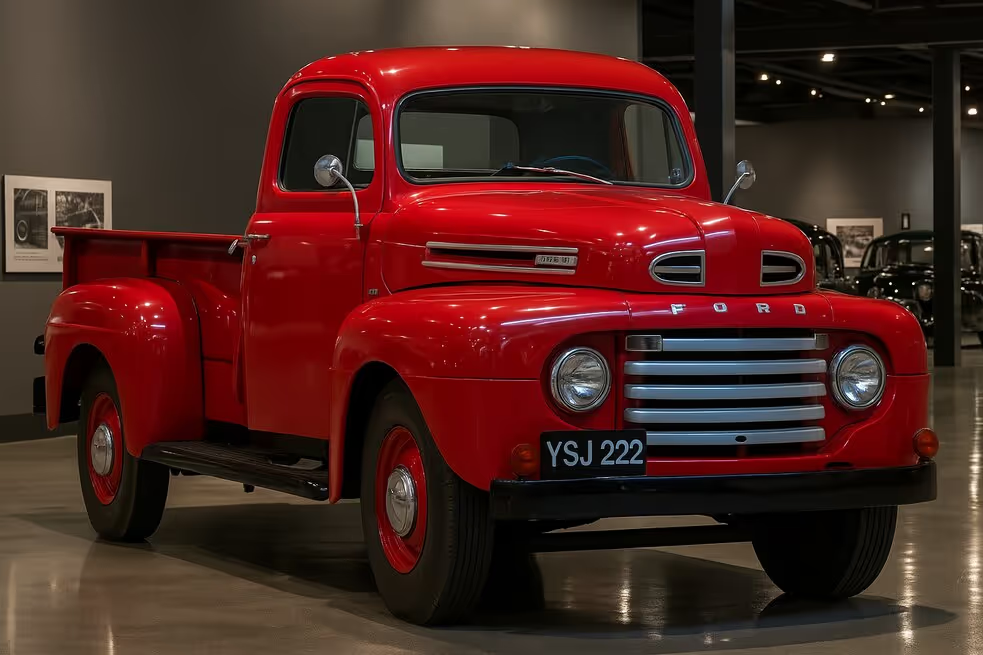


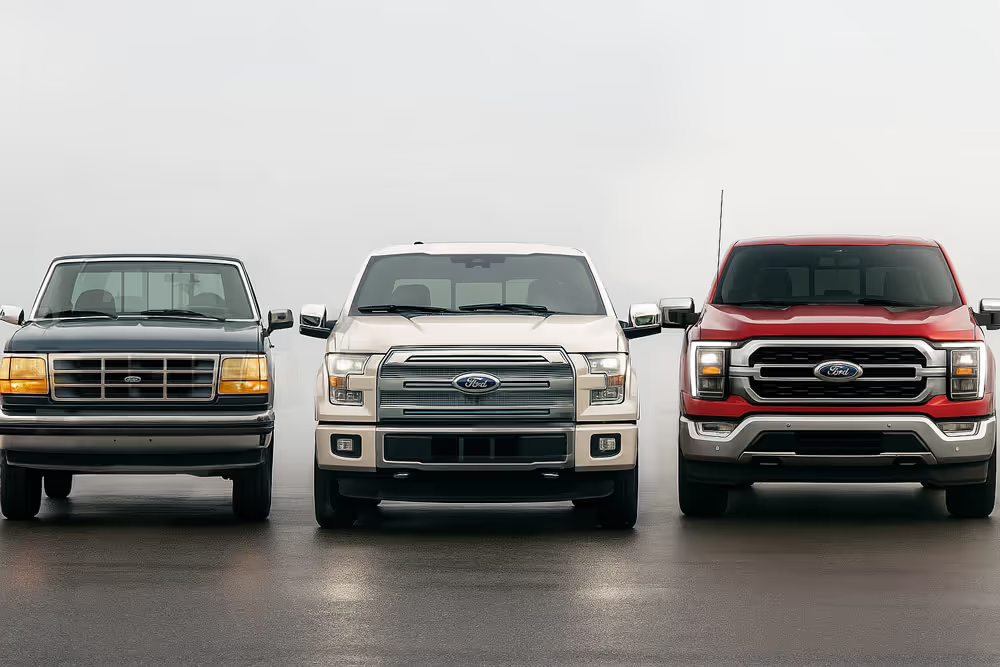
<span>From farm workhorse to high-tech powerhouse: How Ford built an unstoppable automotive icon—and what </span><span>nearly four</span><span> decades in the auto industry taught me about the F-Series.</span>
If you have spent as much time in the automotive industry as I have, you develop a deep appreciation for vehicles that don't just follow market trends but define them. Over my nearly forty years in this business, from working on racing engines in my youth to my time in automotive retail and digital marketing, I have seen hundreds of nameplates come and go. Models get launched with massive fanfare, enjoy a short run, and then fade into obscurity.
Then there is the Ford F-Series.
To understand the modern American automotive landscape, you have to understand the Ford F-150. It isn't merely a pickup truck; it is an industrial phenomenon, a cultural touchstone, and the undisputed heavyweight champion of sales. For nearly five decades, the F-Series has been the best-selling truck in America, and for over forty years, the best-selling vehicle overall. That kind of longevity doesn't happen by accident, nor does it happen through marketing cleverness alone. It happens because a vehicle consistently delivers on its promise to the working men and women who depend on it every single day.
My personal relationship with the F-150 goes back to a foundational chapter in my automotive career. When I joined Ricart Ford full-time, working directly under Rhett and Fred Ricart as the store grew into the number one Ford dealership in America, I received a masterclass in what the F-Series meant to everyday people. On any given Tuesday morning, I would watch contractors, farmers, weekend haulers, and suburban families line up at our dealership. They weren't just buying transportation, they were buying a tool, a partner, and a badge of capability. Selling and servicing thousands of F-Series trucks taught me a fundamental truth about automotive enthusiasts and truck buyers alike: performance isn't just about zero-to-sixty times on a test track; performance is about getting the job done, day in and day out, without fail.
The Origin Story: How a Gap in the Lineup Created a Legend
To appreciate where the modern F-150 sits today, we have to journey back to the post-World War II era. In 1948, Ford introduced the "Bonus-Built" F-Series trucks, ranging from the half-ton F-1 all the way up to the heavy-duty F-8. These early trucks were basic, utilitarian machines with spartan cabins, manual transmissions, and flathead engine options. They were built for mud, gravel, and hard labor, luxury was nowhere on the radar.
By the late 1950s and 1960s, the naming convention shifted to the familiar F-100, F-250, and F-350 designations. The F-100 served as the standard half-ton pickup for decades. However, in 1975, a peculiar regulatory landscape opened the door for a brand-new nameplate that would change history forever.
In 1975, environmental emissions standards were tightening rapidly across the United States. Vehicles with a Gross Vehicle Weight Rating (GVWR) under 6,000 pounds were required to run on unleaded fuel and utilize catalytic converters, which at the time significantly restricted horsepower and added mechanical complexity. Ford engineers spotted a strategic middle ground: they engineered a heavy-duty half-ton pickup with a GVWR slightly above 6,000 pounds.
Nestled right between the half-ton F-100 and the three-quarter-ton F-250, this new truck was christened the F-150. Because it crossed the 6,000-pound threshold, it bypassed the initial catalytic converter mandate for that model year, allowing Ford to offer a more powerful, heavy-duty half-ton truck that could haul heavier loads without sacrificing engine performance.
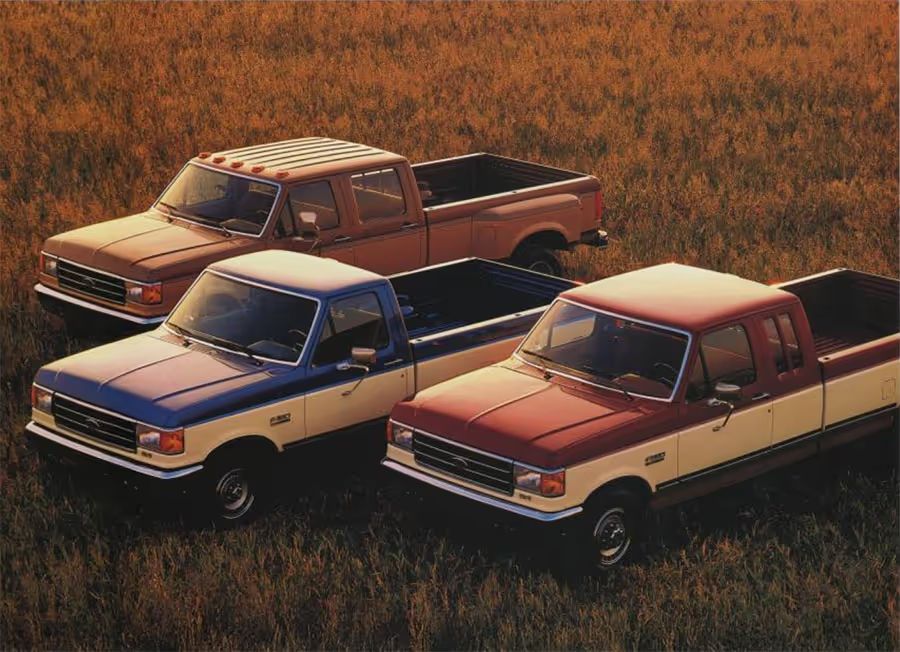
What began as a clever engineering solution to a regulatory requirement quickly captured the imagination of the buying public. Buyers realized that the F-150 gave them the comfortable ride of a half-ton truck with the heavy-duty box frame, stiffer springs, and payload capacity approaching a three-quarter ton. By the early 1980s, the F-150 had completely eclipsed the F-100, leading Ford to retire the F-100 badge altogether in 1983. The F-150 became the undisputed core of Ford’s truck family.
The Engineering Evolution: From Heavy Iron to High-Tech Aluminum
One of the reasons I have always respected Ford’s truck engineering division is their willingness to take massive, high-stakes gambles when their competitors were content to play it safe. Throughout its fourteen generations, the F-150 has spearheaded technical revolutions that transformed the entire light-truck segment.
The Aerodynamic Shift (10th Generation, 1997)
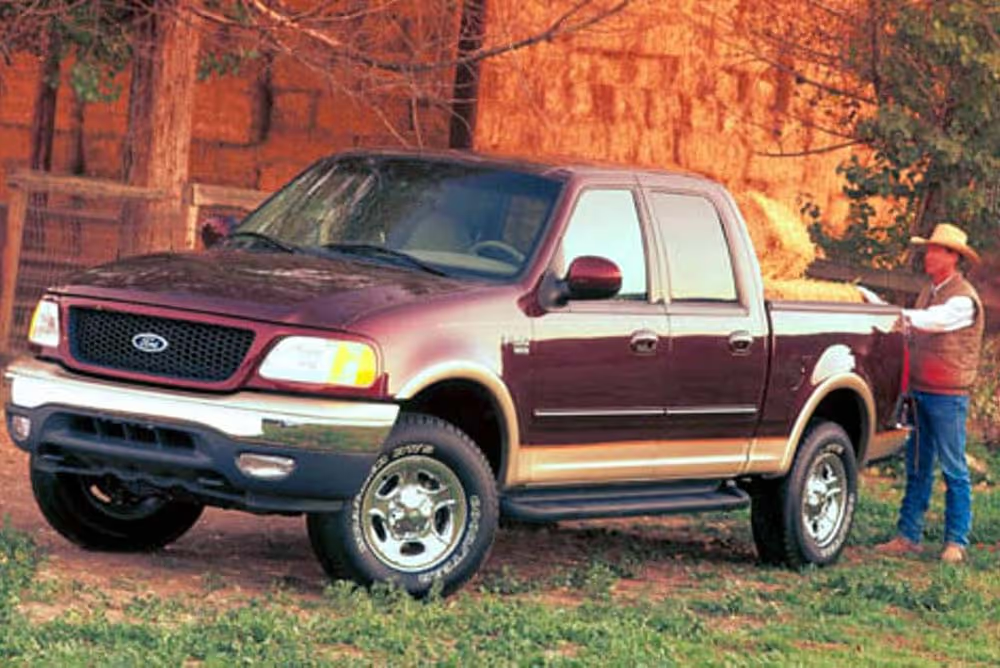
For decades, trucks were square, boxy, brick-like machines. But in 1997, Ford shocked the automotive world by debuting a completely redesigned F-150 featuring smooth, rounded contours, an independent front suspension, and a car-like interior. Purists initially scoffed, but buyers voted with their wallets. The 1997 redesign proved that a truck could offer car-like refinement, superior ride comfort, and daily drivability without sacrificing payload or towing muscle.
The EcoBoost Revolution (12th Generation, 2011)
When Ford announced in 2011 that they were placing a twin-turbocharged 3.5-liter V6 engine dubbed "EcoBoost", into their flagship half-ton pickup, the industry was skeptical. Truck traditionalists insisted that "there is no replacement for displacement" and insisted a V6 could never replace a naturally aspirated V8 in a heavy work truck.
I remember the debates clearly across showroom floors and industry conferences. Yet, Ford proved the doubters wrong. The EcoBoost V6 delivered massive low-end torque, where truck owners actually need it when towing a heavy trailer while delivering improved fuel economy. Today, EcoBoost engines account for the vast majority of F-150 sales, proving that innovation wins when the engineering is sound.
The Military-Grade Aluminum Body Gamble (13th Generation, 2015)
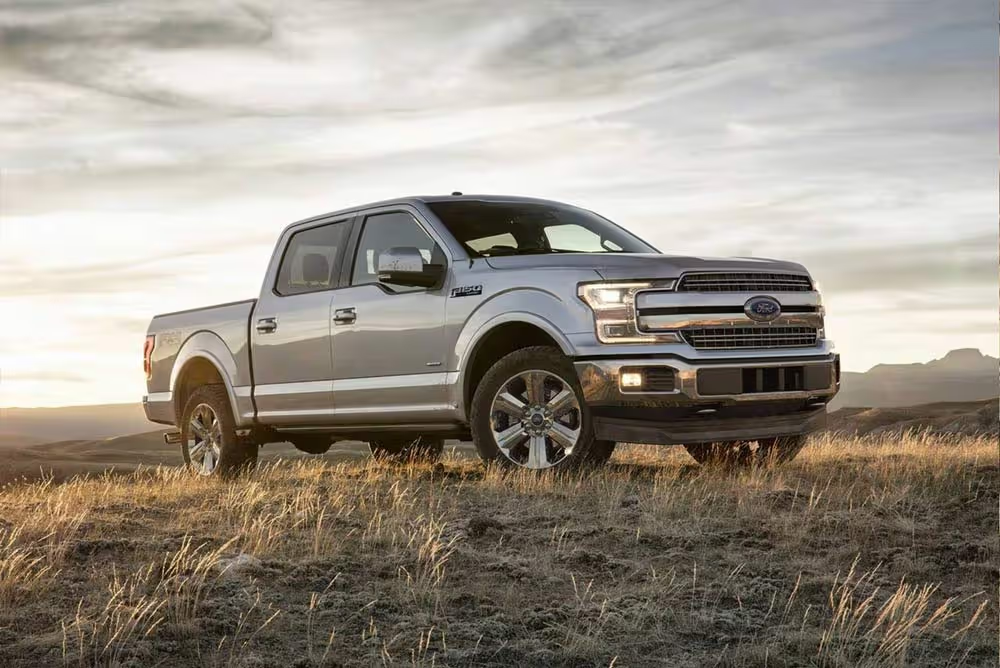
In 2015, Ford executed what was arguably the boldest manufacturing risk in modern automotive history: they replaced the steel cab and bed of the F-150 with high-strength, military-grade aluminum alloy. By shedding roughly 700 pounds of dead weight from the body, Ford's engineers were able to reinvest that weight savings into a stronger high-strength steel frame, larger brakes, and higher payload and towing capacities.
During my time consulting with dealerships across the country through CactusSky Digital, I watched competitors try to run smear campaigns against the aluminum body. But once again, real-world durability tests, crash ratings, and performance numbers spoke louder than marketing noise. The aluminum-bodied F-150 accelerated faster, stopped shorter, hauled more, and eliminated rust concerns for body panels—setting a new benchmark for structural design.
PowerBoost Hybrid & Pro Power Onboard (14th Generation, 2021–Present)
Most recently, Ford introduced the 3.5-liter PowerBoost Full Hybrid powertrain paired with Pro Power Onboard, a system that essentially turns the truck into a mobile power generator producing up to 7.2 kilowatts of exportable electricity. Whether powering an entire job site full of heavy power tools or running home appliances during a severe power outage, this feature transformed the F-150 from mere transportation into a mobile power station.
Performance & Special Editions: When Trucks Met Pure Muscle
You cannot tell the story of the F-150 without diving into the high-performance variants that captured the hearts of car lovers and motorsport enthusiasts. As a lifelong performance enthusiast who grew up around race tuning and high-output engines, these special editions hold a special place in my automotive memory bank.
The SVT Lightning (1993–1995 & 1999–2004)
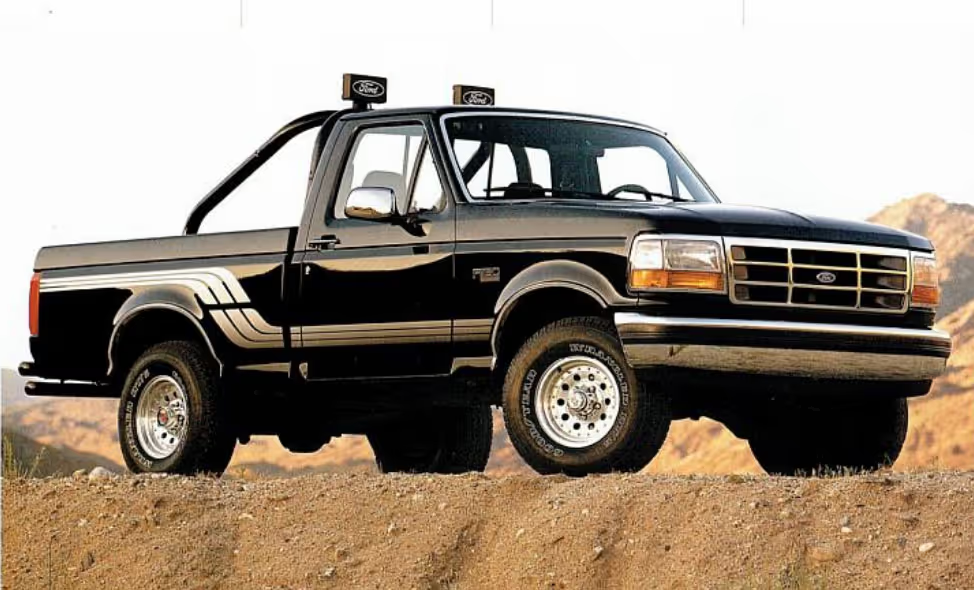
In the early 1990s, Ford's Special Vehicle Team (SVT) decided to see what happened when you injected true sports car DNA into a regular-cab pickup. The First-Gen Lightning featured a tuned 5.8-liter V8 pushing 240 horsepower, upgraded handling suspension, and bucket seats.
However, it was the Second-Generation SVT Lightning (1999–2004) that achieved legendary status. Powered by a supercharged 5.4-liter Triton V8 producing up to 380 horsepower and 450 lb-ft of torque, the Lightning could sprint from 0 to 60 mph in under 5.3 seconds, faster than many contemporary European sports cars of its era. With its lowered stance, side-exit exhaust tips, and supercharger whine, it became an instant icon that collectors fight over today.
The F-150 SVT Raptor (2010–Present)
In 2010, Ford took a left turn away from street racing and created a machine built for desert pre-running and high-speed off-road domination: the F-150 Raptor.
Equipped with long-travel FOX Racing internal bypass shocks, widened track width, aggressive beadlock-capable wheels, and terrain management systems, the Raptor was built to jump sand dunes straight off the factory showroom floor. It created a brand-new high-performance off-road truck segment that competitors are still trying to catch up with to this day.
What It’s Like Behind the Wheel Today
Climbing into a modern, high-trim Ford F-150, whether it’s a Lariat, King Ranch, Platinum, or Limited, feels less like sitting in a utility vehicle and more like settling into a luxury command center.
The driving position is commanding, providing an expansive view over the road. Thanks to acoustic laminated glass and active noise cancellation, the cabin is whisper-quiet at highway speeds, masking the sheer capability beneath your feet.
When you step on the accelerator of a 3.5L EcoBoost or PowerBoost Hybrid, the torque delivery is immediate and relentless. The 10-speed automatic transmission snaps through gears seamlessly, keeping the engine right in the meat of its powerband. The electronic power-assisted steering is surprisingly precise for a vehicle of its scale, and advanced driver-assistance features like BlueCruise hands-free highway driving demonstrate just how far farm trucks have evolved over the last seven decades.
Yet, despite all the leather stitching, massive touchscreen displays, and digital gauge clusters, the soul of the F-150 remains uncompromised. The moment you drop a hitch onto the ball, hook up a 10,000-pound boat or trailer, and pull up a steep grade without feeling the powertrain strain, you remember why this truck earned its reputation.
Collector Market Relevance & The Future Legacy
For a long time, trucks were viewed as disposable work tools that were driven until the wheels fell off and then sent to the scraper. But in recent years, the collector market for classic Ford F-Series trucks has exploded.
Dentside (1973–1979) and Bumpside (1967–1972) F-150s: Clean, rust-free examples of 1970s F-150s with two-tone paint jobs, big-block 460 V8s, and Ranger XLT trim packages are fetching top dollar at major collector auctions.
Original SVT Lightnings: Unmodified, low-mileage 1999–2004 Lightnings have crossed into serious investment-grade collector status.
Early SVT Raptors: First-generation Raptors equipped with the naturally aspirated 6.2-liter V8 are recognized as future classics due to their mechanical simplicity and raw character.
As the industry moves toward electrified options like the F-150 Lightning EV, the traditional internal combustion and hybrid F-150 models stand as a testament to the peak of mechanical utility engineering.
Final Thoughts: A True American Legend
When I reflect on my years in automotive retail at Ricart Ford, my time as a Honda dealer principal, and my decades producing content and training dealers on The AutoHubShow and at CactusSky, the Ford F-150 stands out as a masterclass in product consistency.
Ford didn't keep the F-150 at the top for nearly 50 years by standing still. They did it by listening to their customers, embracing calculated engineering risks, and refusing to compromise on core capability. It is a vehicle that earned its stripes on job sites, dirt roads, racetracks, and family road trips alike.
Whether you prefer a bare-knuckles XL work truck, a high-flying Raptor carving through sand dunes, or a luxury Platinum hauling your horse trailer across the countryside, the Ford F-150 remains one of the greatest automotive success stories ever written.
What are your memories or thoughts about the Ford F-150? I'd love to hear your story.