

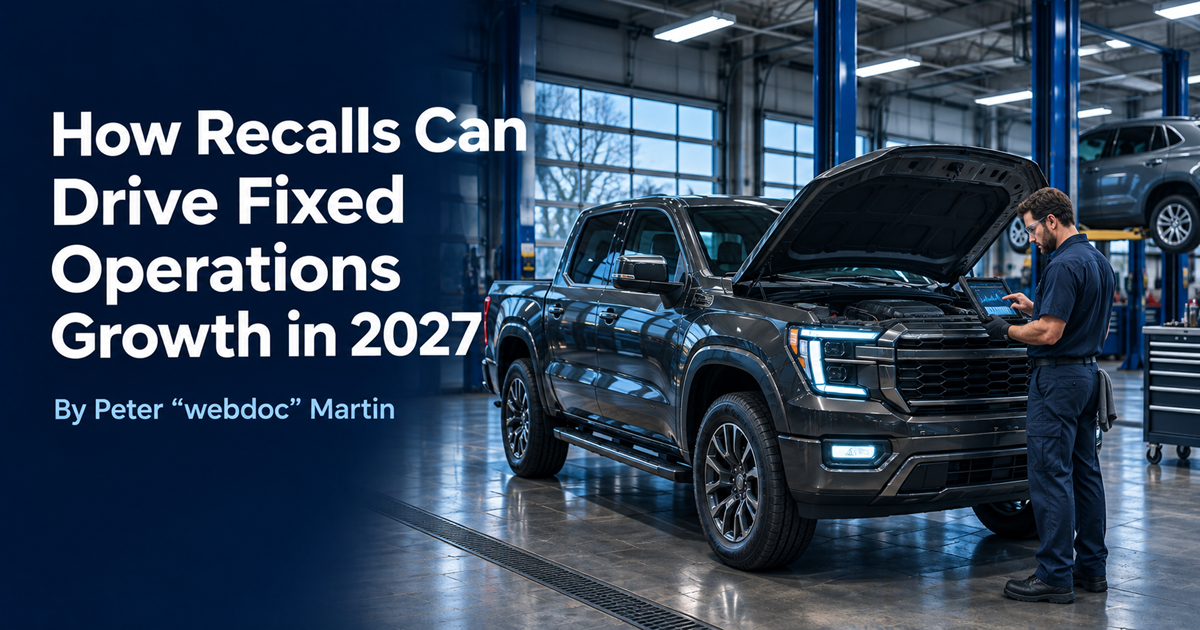
As dealers build their plans for 2027, I believe recalls deserve a more deliberate place in fixed operations. They give a dealership a meaningful reason to reach a vehicle owner, solve a real problem and earn the next service visit.
That opportunity begins with the customer. Someone is driving a vehicle that needs attention. They may not know about the recall. They may have received a letter months ago when there was no remedy available. They may have bought the vehicle used, moved, or simply put the notice aside because getting to the dealership was inconvenient.
A dealer who helps that person understand the issue and get the repair completed has an opportunity to build trust. That can lead to more service activity, stronger retention and relationships with owners the dealership has never served.
The scale deserves attention. In its November 2026 remarks, NHTSA reported that nearly 900 vehicle safety recall campaigns affected more than 29 million vehicles in 2025. Those figures are not a count of available appointments in your market. They are a reminder that recalls should be part of a dealership’s ongoing service plan.
Start with a recall your dealership can complete
Before sending a campaign, get the service department involved.
Which recalls still apply to the vehicles you intend to contact? Is the remedy available? Are the required parts actually available to your dealership? How much technician time will the work require, and how many appointments can the shop handle?
A recall announcement and a repair-ready opportunity can be months apart. A national notice that a remedy is available does not tell you whether your store has the parts, equipment and capacity to complete it. Some remedies can also be handled through a software update without a traditional dealership visit.
This is where I see an important opportunity for 2027. Dealers should be watching existing recalls as closely as new announcements. When a remedy or required parts become available, that is a useful reason to reconnect with affected owners who were previously told to wait.
The message becomes specific: we have checked your vehicle’s eligibility, we have confirmed what is needed, and we can help you take the next step. Preserve any manufacturer instructions about driving, parking or other precautions. Those instructions matter whether or not a repair appointment is available yet.
Make text messaging useful to the customer
Text messaging can be a powerful part of this process because it gives the customer a simple way to respond. A clear message can explain why the dealership is reaching out, identify the vehicle, provide the right next step and let the owner ask a question without starting over on another channel.
But the value comes from what happens after the message is sent.
If the customer replies, “Are the parts really in?” someone needs to answer accurately. If they ask how long the repair takes, the answer needs to reflect that specific repair and the dealership’s schedule. If they sold the vehicle, the record needs to be corrected and the outreach stopped.
Keep the message focused. Identify the dealership. Explain the verified recall in plain language. State that the covered recall repair is at no cost to the owner. Give them a direct way to arrange service or talk with the team.
The scheduling path should be just as clear. A link should take the owner to the correct dealership and an appropriate recall-service appointment path. If the store still needs to confirm parts or a time slot, call it an appointment request. Do not tell the customer they are booked when they are waiting for confirmation.
Text should complement the manufacturer’s notices and the dealership’s other appropriate outreach. Different owners respond through different channels. The objective is to help them complete the repair.
Give the message a familiar face
A short video from an approved dealership representative can help explain the recall and make the communication more personal. It gives the owner a person to connect with and an opportunity to hear what the dealership is asking them to do.
The video still has to earn its place. It should be brief, easy to understand and consistent with the vehicle’s actual recall. The accompanying text should make sense even if the video does not play. The experience needs to connect accurate information, customer questions, scheduling and completed repairs. Each part has to work together.
A familiar face can introduce the dealership. The service experience is what gives the customer a reason to come back.
Protect the trust that brings the customer in
Good recall outreach starts with good data. Match the current owner to the vehicle, verify that the recall remains open and check the contact information. NHTSA’s VIN lookup has limitations, including some newly announced recalls whose affected VINs are still being identified. Use current manufacturer information to confirm eligibility and repair status.
Having a phone number is also different from having permission to use it for a particular text campaign. Dealers need appropriate consent records, clear opt-out instructions and a process that promptly honors applicable opt-outs.
Keep the safety message separate from promotional offers. A recall notification should not become a vehicle-sales pitch or a discount campaign. Permission to use owner information for a recall does not automatically authorize unrelated marketing.
When the customer arrives, explain the covered recall repair clearly. Any additional recommended work should be discussed separately, with its own explanation, price and authorization. A customer who comes in for a no-cost recall should never feel that buying something else is a condition of getting it completed.
Measure the work that gets completed
For fixed operations, the important measures go beyond how many messages went out.
Track the number of eligible vehicles, owners you can appropriately contact, appointment requests, confirmed appointments, arrivals and completed repairs. Keep those stages separate. A click is not an appointment, and an appointment is not a completed recall.
Then look at the economics. What did the campaign cost, including data, messaging, staff time and follow-up? What manufacturer-paid repair revenue and gross profit were actually recorded? Did previously inactive customers return? Did first-time visitors come back for another service visit?
Those answers help the dealership decide what to repeat and where to improve. Additional customer-pay work and future visits should be measured separately rather than assumed in advance.
Start with one recall the store can support. Get the data right, confirm the parts and capacity, test the communication and make sure someone owns the replies. Learn from the first group before expanding.
For 2027, I would put recall outreach on the fixed-operations calendar with a clear owner and a regular review of remedy and parts availability. There are customers who need help completing these repairs. Reach them with accurate information, make the next step convenient and deliver the service you promised.
That is how a recall can become the beginning of a lasting customer relationship.