The Mustang That Became a Movie Star
How Steve McQueen’s Bullitt Mustang Changed Automotive History Forever
Some cars become famous.
A select few become legends.
And then there are cars like the Bullitt Mustang, a vehicle so iconic that more than fifty years after it first appeared on the silver screen, people still recognize it instantly.
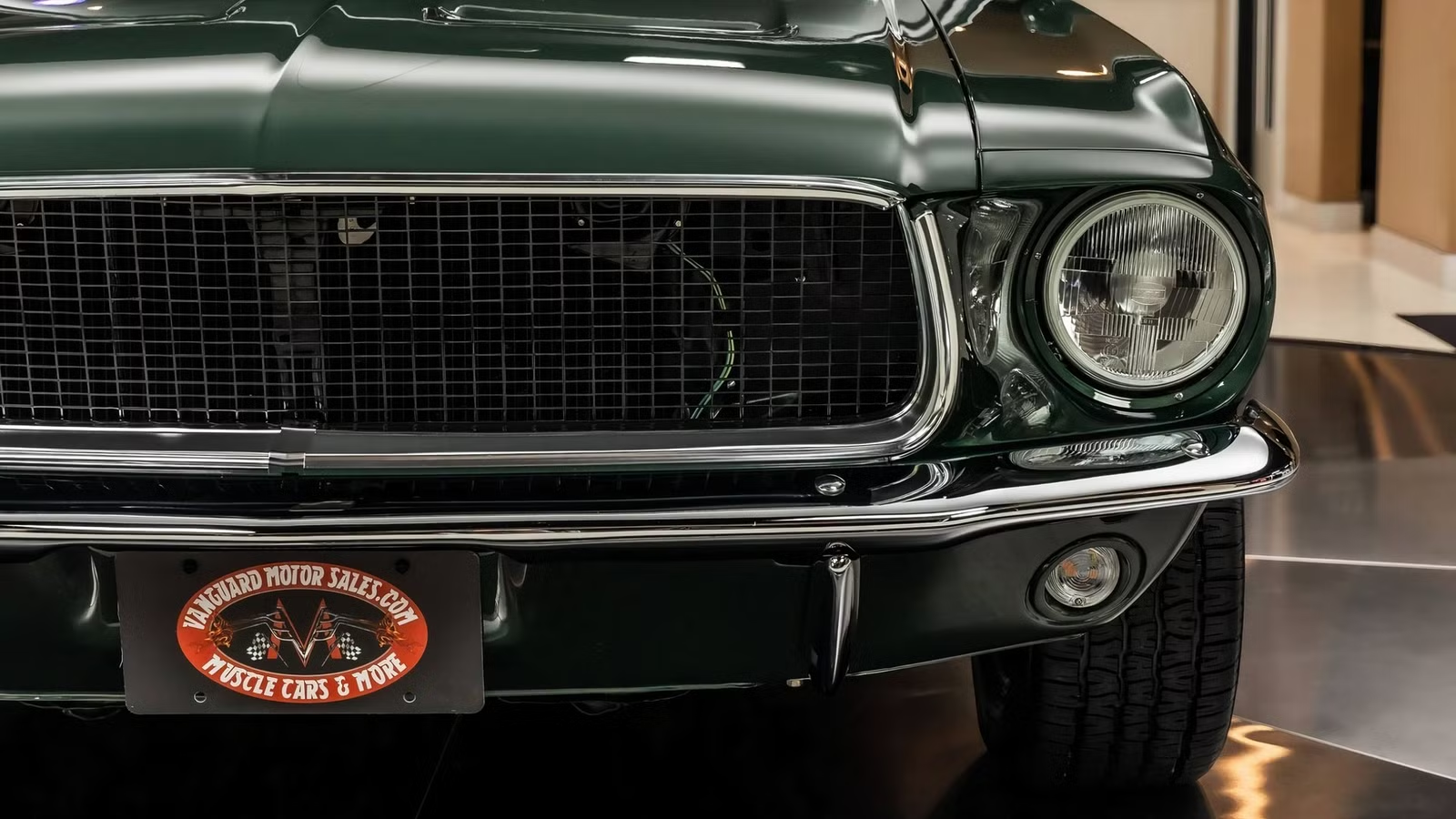
What’s fascinating is that the Bullitt Mustang wasn’t created to become a legend. It wasn’t designed as a limited edition. It wasn’t built as a marketing exercise. It was simply a 1968 Ford Mustang GT Fastback chosen to help tell a story.
What happened next changed automotive history forever.
The Coolest Cop in Hollywood
In 1968, Steve McQueen was already becoming one of Hollywood’s biggest stars.
McQueen wasn’t interested in making another typical police drama. He wanted realism. He wanted authenticity. He wanted audiences to feel like they were sitting in the passenger seat rather than watching from the theater.
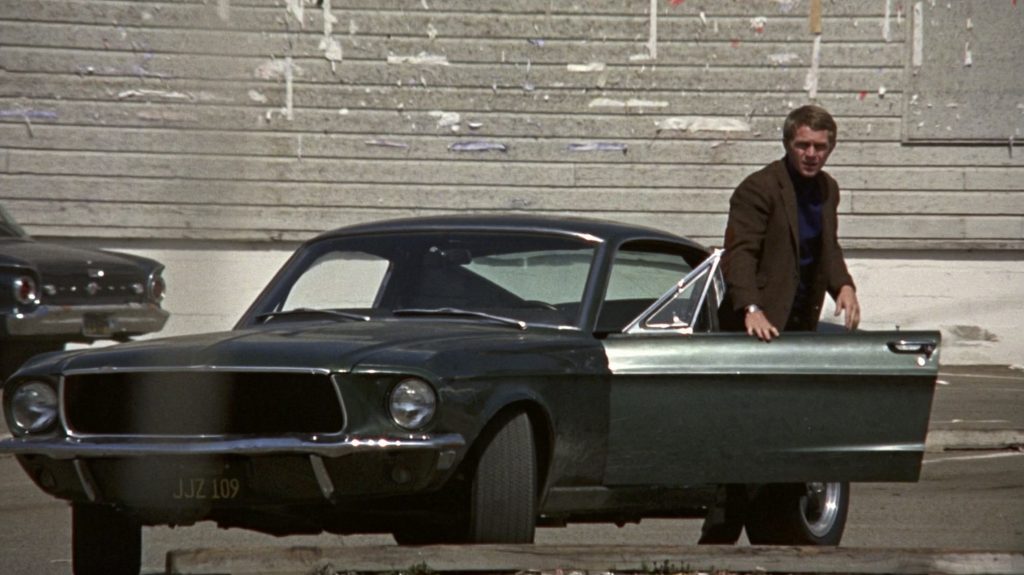
The film was Bullitt, a gritty crime thriller set in San Francisco, and McQueen played Lieutenant Frank Bullitt, a no nonsense detective who let his actions do the talking.
To match Bullitt’s personality, the production needed a car.
Not something flashy.
Not something exotic.
Just something tough, fast, and understated.
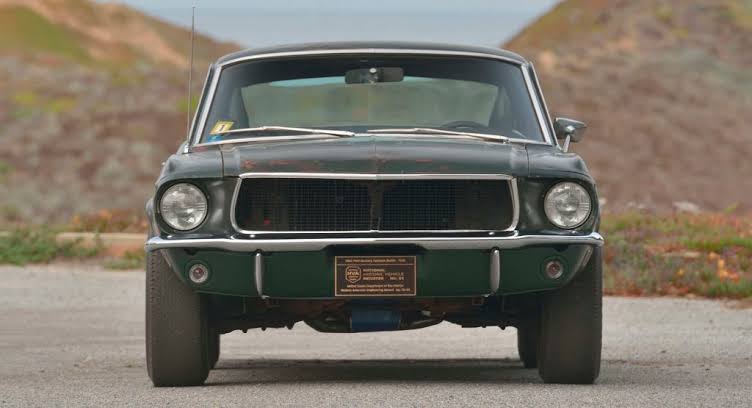
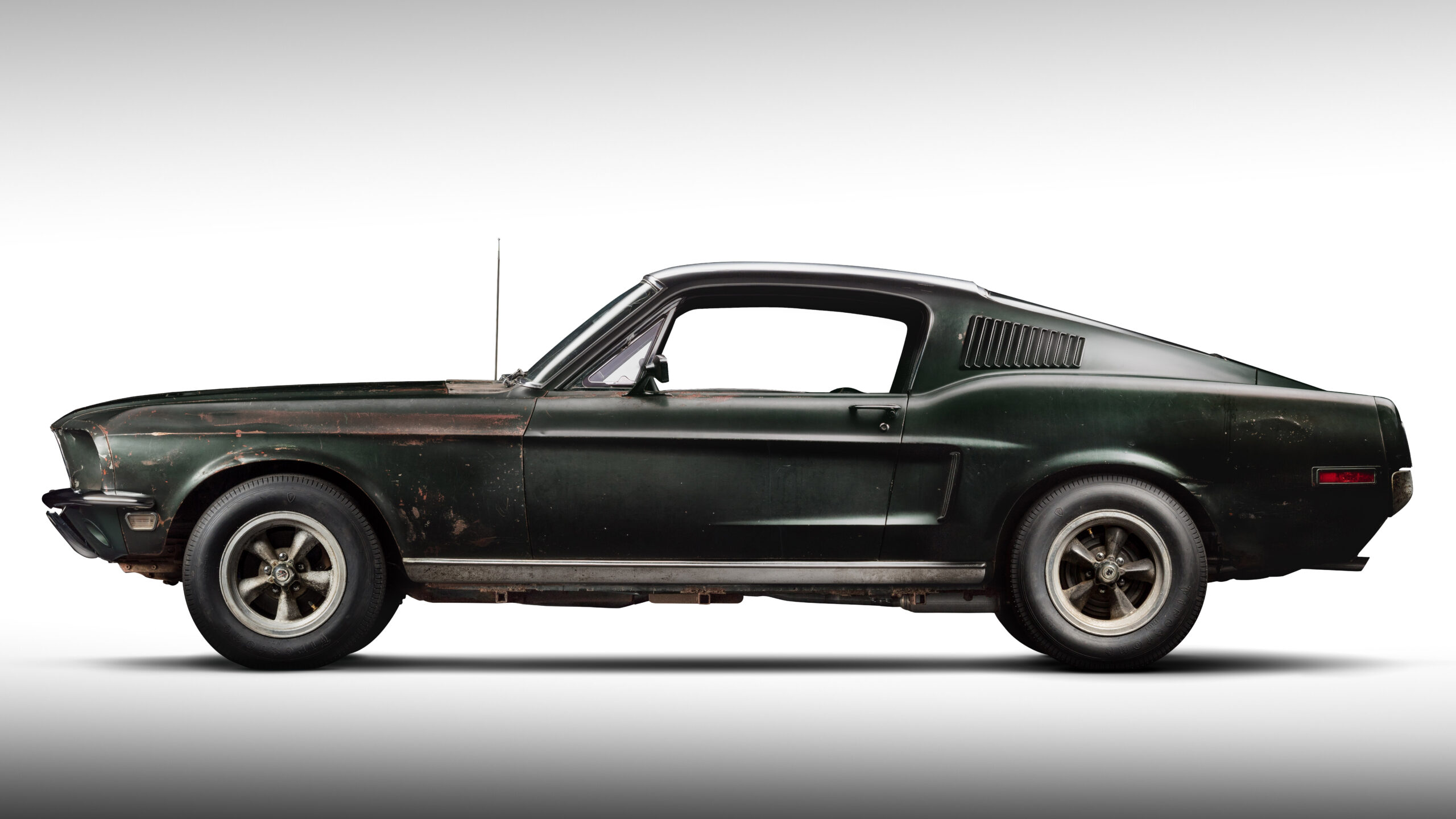
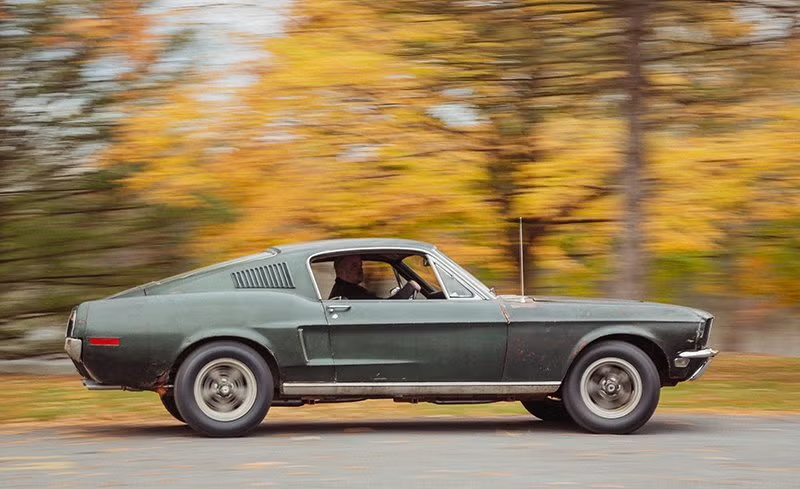
The answer was a Highland Green 1968 Ford Mustang GT Fastback.
Nobody could have imagined what that decision would create.
Two Mustangs, One Legend
One of the biggest misconceptions about the Bullitt Mustang is that there was only one car.
In reality, the production purchased two nearly identical 1968 Mustang GT Fastbacks. Both were equipped with Ford’s powerful 390 cubic inch V8 and four speed manual transmission.
One car handled the close up and hero shots.
The second car absorbed the punishment required for the more aggressive stunt work.
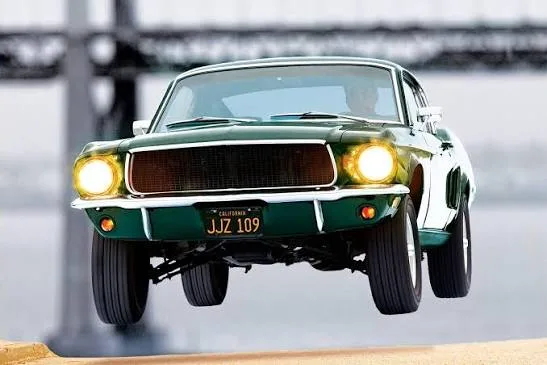
The stunt car endured brutal jumps, hard landings, and countless high speed runs through San Francisco’s steep streets.
At the time, nobody was thinking about preserving movie cars.
They were simply tools used to make the film.
Thankfully, history had other plans.
The Greatest Car Chase Ever Filmed
Every generation has its defining automotive moment.
For many enthusiasts, the Bullitt chase scene is that moment.
Before Bullitt, movie car chases often relied on camera tricks, undercranked film, and studio effects to create the illusion of speed.
Bullitt changed everything.
Director Peter Yates, Steve McQueen, stunt coordinator Carey Loftin, stunt driver Bud Ekins, and mechanic Max Balchowsky created something audiences had never seen before.
Real cars.
Real streets.
Real speed.
Real danger.
The chase through San Francisco lasts roughly ten minutes and remains one of the most studied automotive sequences in film history.
What most viewers don’t realize is that the route itself is largely cinematic illusion.
The chase jumps between multiple San Francisco neighborhoods and locations that are miles apart. Through brilliant editing, it feels like one continuous pursuit.
That editing earned Bullitt an Academy Award and helped cement the sequence as one of the greatest action scenes ever filmed.
Building a Better Movie Car
The Mustang used in Bullitt wasn’t completely stock.
Mechanic Max Balchowsky knew the cars would face punishment few production vehicles had ever experienced.
The suspension was strengthened.
Koni shocks were installed.
Shock towers and inner fenders were reinforced.
Additional bracing was added to help the Mustang survive repeated jumps and landings.
Camera mounts were welded directly to the car.
Openings were cut into the trunk area to accommodate filming equipment and wiring.
The goal wasn’t to create a race car.
The goal was to build a Mustang that could survive weeks of punishment while carrying expensive camera equipment.
It’s remarkable that either car survived at all.
Steve McQueen’s Connection
Part of the Bullitt legend comes from Steve McQueen himself.
McQueen was a genuine car enthusiast and accomplished racer.
While stunt professionals handled many of the most dangerous sequences, McQueen insisted on driving portions of the film himself whenever possible.
That authenticity comes through on screen.
When you watch Bullitt today, you don’t feel like you’re watching actors pretending to drive.
You feel like you’re watching drivers who understand speed, weight transfer, and risk.
That’s one reason the film still holds up decades later.
The Lost Mustang
For years, automotive enthusiasts believed only one Bullitt Mustang survived.
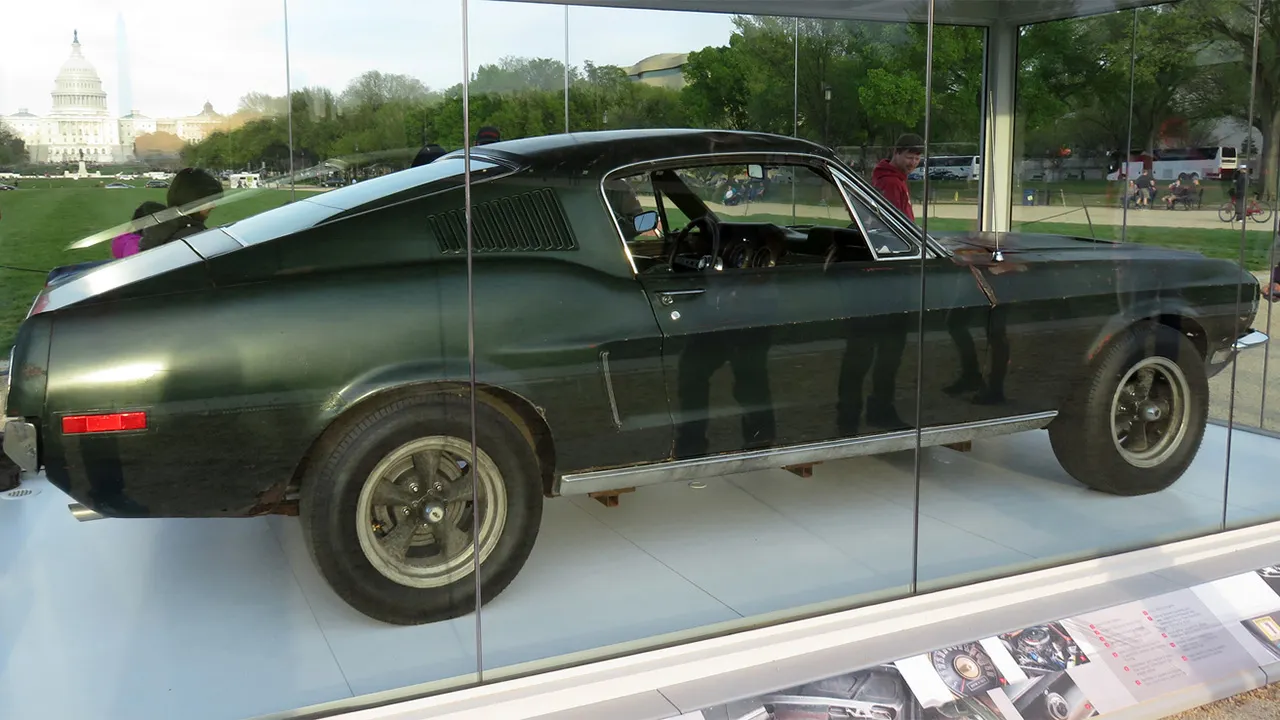
The hero car eventually found its way into the ownership of Robert Kiernan, who purchased it in 1974.
The Mustang remained hidden from public view for decades.
While the collector car world searched for it, the car quietly sat in the Kiernan family’s possession.
Then in 2018, Sean Kiernan unveiled the car to the world.
The reaction was immediate.
The original Bullitt Mustang had survived.
Even more remarkable, it remained largely untouched and retained many of the unique modifications used during filming.
In January 2020, the Bullitt hero car crossed the auction block at Mecum Kissimmee.
The result stunned the automotive world.
The Mustang sold for $3.74 million.
At the time, it became the most valuable Mustang ever sold at auction.
More Than a Car
The Bullitt Mustang’s importance extends far beyond the movie itself.
It transformed how Hollywood approached automotive action sequences.
It helped define Steve McQueen’s image as the king of cool.
It elevated the Mustang from a successful pony car to a cultural icon.
Ford has honored the car multiple times through special edition Bullitt Mustangs, including models released in 2001, 2008, and 2019.
Yet none of those cars can fully capture what made the original special.
Because the original wasn’t created by a marketing department.
It earned its reputation one jump, one burnout, and one chase scene at a time.
Why We Still Love It
As someone who has spent a lifetime around automobiles, I’ve often thought about why certain cars transcend transportation.
The Bullitt Mustang is one of those rare vehicles.
It isn’t the rarest Mustang ever built.
It isn’t the fastest Mustang ever built.
It isn’t even the most expensive Mustang ever built.
What it represents is something much more powerful.
It represents authenticity.
It represents a time when filmmakers were willing to take risks.
It represents an era when cars had personality and imperfections.
Most importantly, it reminds us why we fell in love with automobiles in the first place.
Every car tells a story.
Few tell one as well as the Bullitt Mustang.
And that’s why, more than half a century later, the Highland Green Mustang from Bullitt remains one of the greatest movie cars ever created.
Not because Ford built it.
Not because Steve McQueen drove it.
Because together, they created a legend.

Like what you’re reading?
If you’d like to explore how content writing, blogging and articles can boost your online presence or want more information, schedule a quick call with Peter “webdoc” Martin.
Share or Print