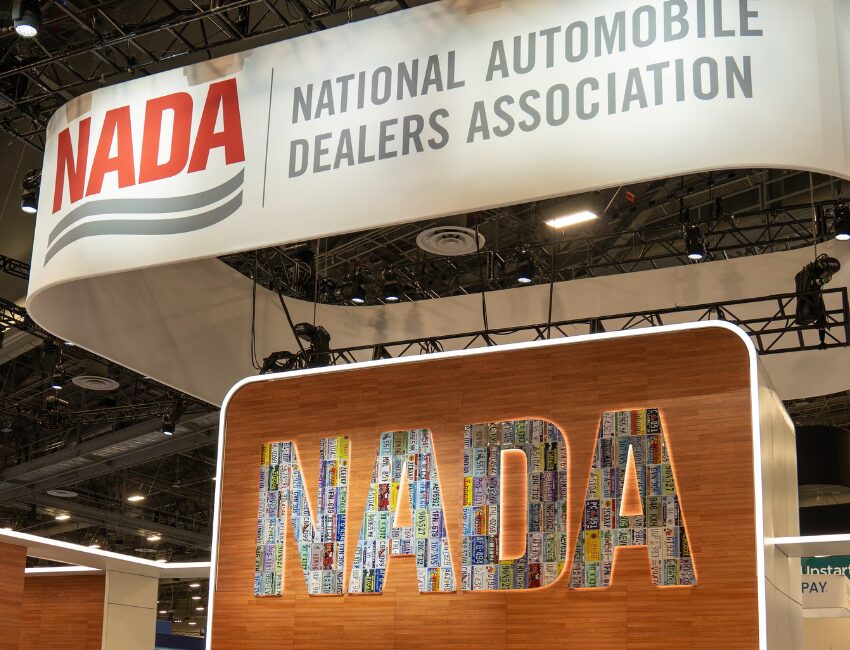
I just returned from NADA Show 2026, and if there was one word that dominated the convention floor, it was AI.
Artificial intelligence was not tucked into side booths or niche demos. It was front and center across major platforms, DMS providers, CRM companies, inventory tools, service lane technologies, marketing automation systems, and call management solutions. Everyone had an AI story. Everyone had an AI layer. Everyone had an AI assistant.
But as I walked the floor and listened to presentations, spoke with vendors, and talked with dealers, one question kept coming to mind.
What outcomes are you actually buying?
That is the question every dealer principal, general manager, fixed ops director, and department head needs to answer before signing an AI contract.
Step One: Define the Outcome Before the Tool
The first step in any AI evaluation process should not be a demo. It should be a meeting.
Bring together key management. Sales, service, BDC, marketing, accounting. Sit down and define what outcomes you are trying to accomplish.
Are you trying to increase appointment show rates?
Reduce missed service calls?
Improve inventory turn?
Increase gross profit per used vehicle?
Capture after hours leads?
Lower payroll costs?
Improve follow up consistency?
If your leadership team cannot clearly articulate the outcome, you are not ready to buy technology.
AI is not a strategy. It is a tool. And tools only work when they are pointed at a defined objective.
At NADA this year, I saw a lot of powerful technology. I also saw dealers gravitating toward solutions because they were impressive, not because they were necessary. That is where mistakes begin.
Integration Is Still Early Stage
Many of the AI products being demonstrated are new. Some are built on top of existing platforms. Others are independent systems that promise integration with your CRM, DMS, website, inventory feeds, and service scheduler.
But here is the reality. AI products are evolving faster than dealership infrastructure.
Most dealerships operate with multiple core systems that were not originally designed to communicate seamlessly. Now AI layers are being added on top of those systems.
You need to ask very direct questions:
How does this integrate with my DMS?
Is this a native integration or a data scrape?
How often does the data refresh?
What happens if the integration fails?
Who owns the data?
Can I export it if I leave?
These are not technical details. They are operational risk factors.
We are in the early innings of AI deployment in automotive retail. Some of these tools are exceptional. Some are still being refined. Some may not exist in three years.
Which brings us to the next caution.
Vet the Company, Not Just the Demo
AI is hot. Capital is flowing. Startups are launching at a rapid pace.
History gives us a lesson here.
During the dot com boom, dealerships signed contracts with companies that had impressive websites, aggressive sales teams, and unproven business models. Many of those companies disappeared just as quickly as they arrived.
AI enthusiasm feels similar in terms of velocity.
Before you implement any AI platform, ask:
How long has this company been operating?
Are they profitable?
Who funds them?
What is their runway?
How many rooftop clients do they have?
Can you speak directly to at least three current dealer customers?
What is their support structure?
The stability of the company matters as much as the sophistication of the product.
An AI platform that disappears in 18 months can create operational disruption, data loss, and cultural fatigue inside your store.
Demand Measurable ROI
One of the most encouraging things I observed at NADA 2026 was that dealers are asking better questions than they did two years ago.
Instead of asking what AI can do, they are asking what it improves.
That is progress.
If a vendor cannot clearly explain:
The KPI it impacts
The expected lift range
The timeline to measurable results
The required internal changes
Then you are not evaluating a business solution. You are watching a technology presentation.
AI that answers service calls should show call capture improvement percentages.
AI that prices vehicles should show inventory turn acceleration.
AI that manages follow up should show appointment conversion improvement.
If outcomes are vague, proceed cautiously.
Culture and Process Still Win
No AI system will compensate for unclear processes or disengaged management.
Dealers who reported successful AI rollouts consistently emphasized leadership involvement, training, and accountability. The technology amplified good process. It did not replace it.
If your team is not aligned, if your CRM is not being used consistently, if your follow up discipline is inconsistent, AI will not fix those issues. It will automate them.
Before you buy, evaluate your current process maturity.
Peel Back the Layers
AI solutions today are often marketed as turnkey and plug and play. In reality, implementation requires configuration, oversight, monitoring, and refinement.
Peel back the layers of the onion.
Ask to see the underlying logic.
Ask how the system learns.
Ask what guardrails are in place.
Ask how human override works.
Ask how errors are corrected.
Transparency matters.
This is especially important when AI is communicating directly with customers. Brand voice, compliance language, and accuracy are not areas where experimentation should be casual.
The 2026 Reality
NADA 2026 made one thing clear. Artificial intelligence is not going away. It is moving into every department of the dealership.
Service scheduling.
Inventory pricing.
Lead engagement.
Digital retailing.
Equity mining.
Reputation management.
Group level reporting.
The ecosystem is expanding rapidly.
The opportunity is real. The potential efficiency gains are significant.
But disciplined execution will separate the winners from the early adopters who chase every trend.
The Question That Matters
As I reflect on what I saw last week in Las Vegas, I return to the same central question.
What outcomes are you buying?
If you can define the outcome clearly, align leadership around it, vet the company thoroughly, confirm integration stability, and demand measurable ROI, then AI can be a powerful accelerator.
If you cannot, you risk repeating history.
AI is hot. That does not mean it is mature.
Dealers who approach this moment with thoughtful evaluation rather than excitement will be the ones who benefit most in 2026 and beyond.
Peter “webdoc” Martin
Co Host, The AutoHub Show