How Smart Dealers Use Year-End Culture Building to Reduce Turnover and Win in 2026
If you are a new car dealer in today’s market, you already know the hard truth.
Hiring is harder than ever been. Training costs keep rising. And the revolving door of technicians, advisors, BDC staff, and salespeople is draining profitability, productivity, and morale.
The dealers who are winning are not doing anything flashy.
They are doing something far more powerful.
They are building an intentional company culture.
And for many of the best operators I work with, that culture work starts at the end of the year, not with a party, but with a purpose.
This article will walk you through why year-end team building matters in automotive retail, what actually works inside a dealership environment, and how you can turn one well-executed initiative into a 2026 retention strategy that pays dividends all year long.
Why employee retention is now a profit strategy
In a dealership, turnover is not just an HR problem.
It is a fixed operations problem, a CSI problem, a sales efficiency problem, and ultimately a net profit problem.
When employees leave, you lose:
- Customer relationships
- Process consistency
- Productivity and throughput
- Leadership time spent rehiring instead of improving operations
The most successful dealerships understand one thing clearly.
You cannot incentivize your way out of turnover.
You cannot party your way out of turnover either.
What you can do is create an environment where good people want to stay, feel respected, feel supported, and see a future.
That is where year-end culture building becomes a strategic advantage.
Why the end of the year matters more than you think
The end of the year is the one moment when:
- Teams naturally reflect on wins and frustrations
- Employees are emotionally open to recognition
- Leadership can reset expectations and priorities
- You can show, not just say, that people matter
Handled correctly, year-end initiatives create goodwill that carries into the first quarter, which is historically when many dealerships experience avoidable turnover.
Handled poorly, they feel like empty gestures.
The difference comes down to intentionality and relevance to dealership life.
What actually works in a dealership environment
Generic corporate team building does not translate well to automotive retail.
Your team does not need trust falls or off-site retreats.
They need recognition, clarity, fairness, and connection across departments.
Here are the approaches that consistently resonate inside real dealerships.
- Recognize impact, not just numbers
Top dealers move beyond “top salesperson” or “highest hours per RO.”
They recognize:
- Advisors who saved customer relationships
- Technicians who helped teammates succeed
- Parts staff who prevented delays
- BDC agents who filled bays quietly and consistently
- Office and title staff who keep deals moving without recognition
When recognition is tied to values and customer impact, employees feel seen, not ranked.
Best practice: Create year-end awards tied to behaviors you want repeated in 2026, not just production totals.
- Bring departments together intentionally
One of the biggest morale killers in dealerships is internal friction.
Sales vs service. Advisors vs technicians. BDC vs the store.
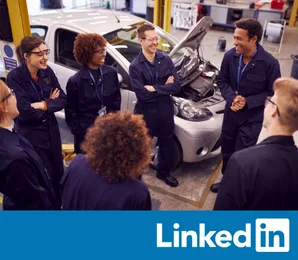
Year-end team building works when it breaks silos.
Examples that work well:
- Mixed team skill challenges tied to real dealership tasks
- Cross department problem solving sessions focused on fixing daily frustrations
- Shadowing experiences that build empathy and understanding
When people understand how their work impacts others, respect increases and conflict drops.
- Give employees control and a voice
Employees leave when work feels harder than it needs to be.
High performing dealerships use year-end sessions to identify:
- Process bottlenecks
- Approval delays
- Tool and system frustrations
- Scheduling pain points
The key is follow-through.
Best practice: Commit publicly to fixing at least two employee-identified issues in the first quarter and communicate progress clearly.
Nothing builds trust faster than visible action.
- Make appreciation feel fair and personal
One-size-fits all rewards rarely work.
Some employees value time.
Some value family experiences.
Some value tools, training, or financial flexibility.
Offering choice increases perceived fairness and reduces resentment.
Best practice: Allow employees to choose from a short list of meaningful rewards rather than forcing a single option.
- Include families when possible
Dealership schedules impact families more than most industries.
The best operators understand that retention is not just about the employee; it is about the household.
Family-inclusive events, even simple ones, help build support around the employee’s role and schedule.
This creates loyalty that bonuses alone cannot buy.
Turning year-end goodwill into a 2026 retention plan
This is where many dealerships fall short.
A great December event without a January plan creates short-term morale and long-term disappointment.
Smart dealers use year-end culture work as the launch point for a retention system.
Here is a simple framework you can implement.
Step 1: Stabilize in Q1
- Structured onboarding with 30, 60, and 90-day check-ins
- Short weekly manager one-on-ones for frontline staff
- Quick wins that remove daily friction
Step 2: Develop in Q2
- Clear role-based training paths
- Mentorship for technicians and advisors
- Skill progression tied to pay and responsibility
Employees stay when they see a future, not just a paycheck.
Step 3: Retain in Q3
- Stay interviews with top performers
- Honest conversations about career goals
- Competitive pay and benefit benchmarking
Retention is proactive, not reactive.
Step 4: Reinforce culture in Q4
- Regular recognition moments
- Community involvement
- Clear communication of wins and improvements
Culture compounds when it is reinforced consistently.
The takeaway for new car dealers
Employee retention is no longer optional.
It is a competitive advantage.
The dealerships that will win in 2026 are the ones that:
- Treat culture as an operating system, not an event
- Use year-end moments to create momentum, not just memories
- Invest in people with the same discipline they apply to inventory, marketing, and fixed ops performance
If you want better customers, better CSI, stronger fixed operations, and more profitable growth, start by building a place where good people want to stay.
In the new-car business, your people are still your most important inventory.